
Last updated October 16, 2026
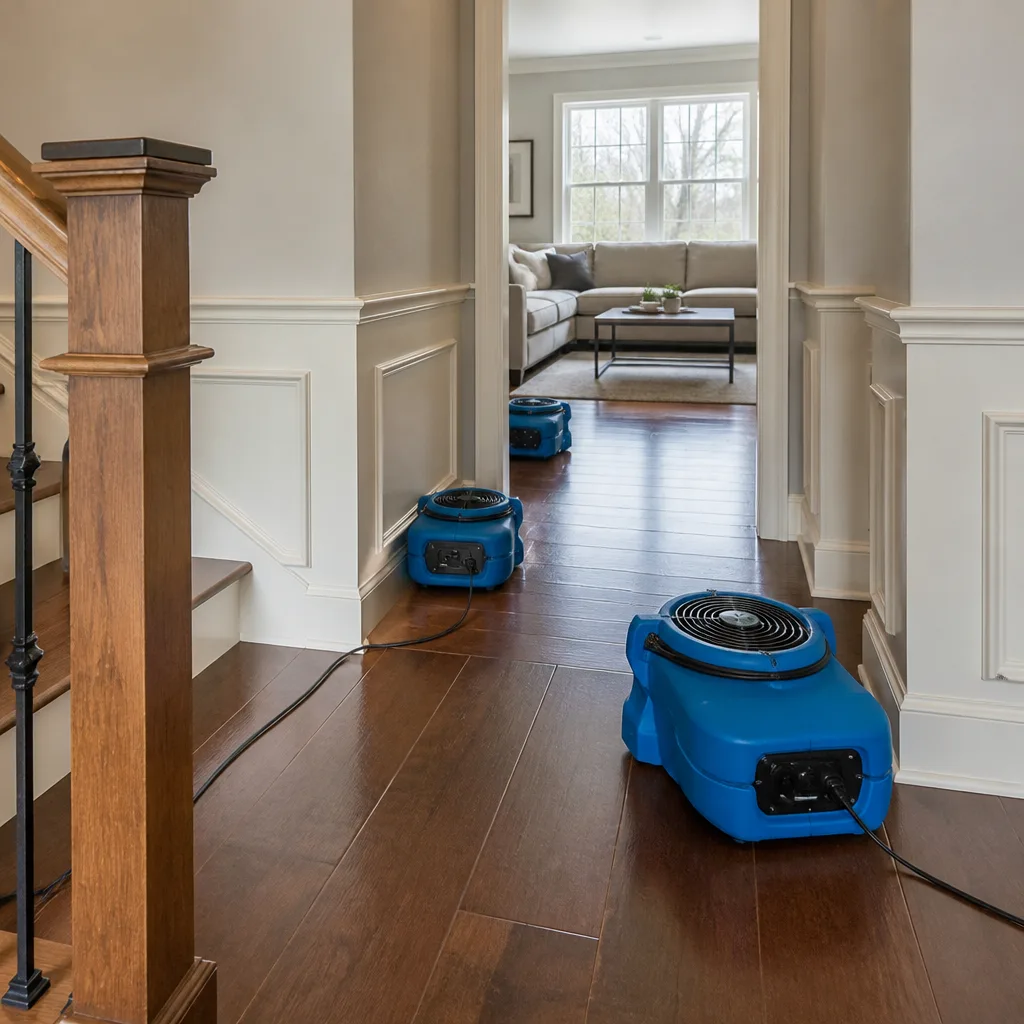 Water damage drying
 Fire & smoke cleanup
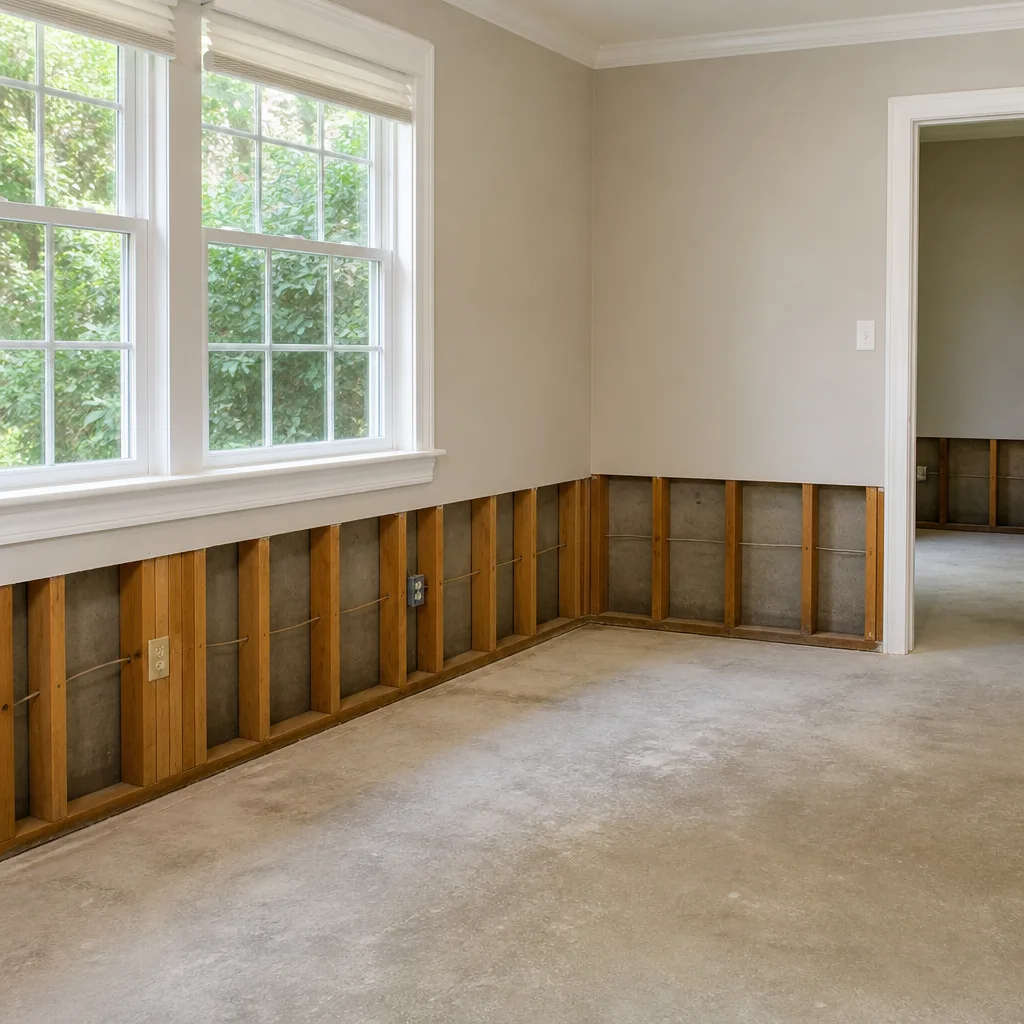 Mold remediation
 Storm response
 Sewage cleanup
 Reconstruction
Free visual inspection and a written scope of work before any mitigation begins - photos, moisture readings, and drying logs go in your claim file
The scope we write is the scope we bill. Anything new gets shown to you, in writing, before we touch it.
Get your free estimateDIY vs Professional Damage Restoration: The Santa Clarita Homeowner’s Decision Guide
A box fan and a rented dehumidifier from a big-box store remove surface moisture effectively enough. But they operate at roughly 12 to 15 percent of the airflow velocity required to extract moisture from inside a 2×4 wall cavity, which happens to be the exact place mold starts. This guide walks you through what DIY drying genuinely handles well in Santa Clarita, what it cannot do no matter how diligent you are, what the real costs look like, and where the legal exposure hides. By the end, you’ll know exactly when to grab a towel and when to pick up the phone.
Restoration work we handle
Quick Answer
DIY water damage restoration in Santa Clarita is appropriate for clean-water surface spills under roughly 10 square feet that you catch within the hour. For anything larger, anything involving contaminated water, or anything that has soaked into drywall, flooring, or framing, professional restoration is not a luxury. If you’re unsure how to choose the right team, read our guide on How to Hire a Damage Restoration Contractor in Santa Clarita: A Step-by-Step Guide. It is the only path to drying a structure to the moisture levels California building codes and the IICRC S500 standard require before walls get closed back up. Consumer-grade equipment physically cannot reach those numbers, and the failure to reach them creates a concealed defect that can void an insurance claim or surface in a future home inspection.
Table of Contents
- What DIY Drying Genuinely Handles Well
- What DIY Cannot Do, Regardless of Effort
- California’s Legal Exposure for DIY Restoration
- What “Drying to Protocol” Actually Means
- The Honest Cost Comparison: DIY vs Professional
- The Hybrid Approach: When to Split the Work
- Why Moisture Mapping Is the Documentation That Matters
- Common Mistakes to Avoid
- When to Call a Professional
- Frequently Asked Questions
- The Bottom Line
What DIY Drying Genuinely Handles Well
We are not here to tell you that every water event requires a restoration crew. That would be dishonest, and it would also be bad advice. There are three scenarios where a homeowner in Santa Clarita can handle water damage themselves with good results.
First: small surface spills caught immediately. A knocked-over glass of water, a minor overflow from a sink that you wiped up within minutes, or a small appliance leak confined to tile or sealed hardwood. If the total affected area is under 10 square feet and the water never touched drywall, baseboards, cabinets, or carpet padding, a thorough manual dry with towels followed by good ventilation is sufficient. No restoration company will tell you otherwise because no restoration company would be needed for that job.
Second: pre-mitigation extraction while you wait for a crew. This is where the DIY effort genuinely helps. If a supply line bursts at 2 a.m., the damage is happening whether or not professionals are on the way. Removing as much standing water as possible with a wet-dry vac, moving furniture out of the wet zone, propping up wet cushions, and lifting the bottom edge of any soaked carpet away from the tack strip all reduce the final scope of the job. This is not DIY restoration. This is damage reduction while the cavalry is en route. It lowers the eventual bill and shortens the drying window.
Third: protecting salvageable contents. Photos, documents, electronics, and keepsakes can be moved to a dry area, gently blotted, and set out with light airflow. The key word is gently. Aggressive drying of photographs or heirloom textiles with direct heat or forced hot air warps, curls, and destroys them. For contents that can be replaced, do not spend hours trying to save them. For contents that cannot be replaced, slow and gentle is the way.
When we walk into homes across Santa Clarita after a water event, the homeowners who did these three things typically have a shorter drying cycle and a lower final invoice. The act of moving wet contents out of standing water is real mitigation. The mistake comes when people mistake that initial effort for the entire job.
What DIY Cannot Do, Regardless of Effort
There are four things no amount of rental equipment, elbow grease, or YouTube research can accomplish with consumer-grade tools. We know this because the equipment we run on every restoration job in Santa Clarita is the same class of gear used on large commercial losses, and even that equipment requires training to deploy correctly.
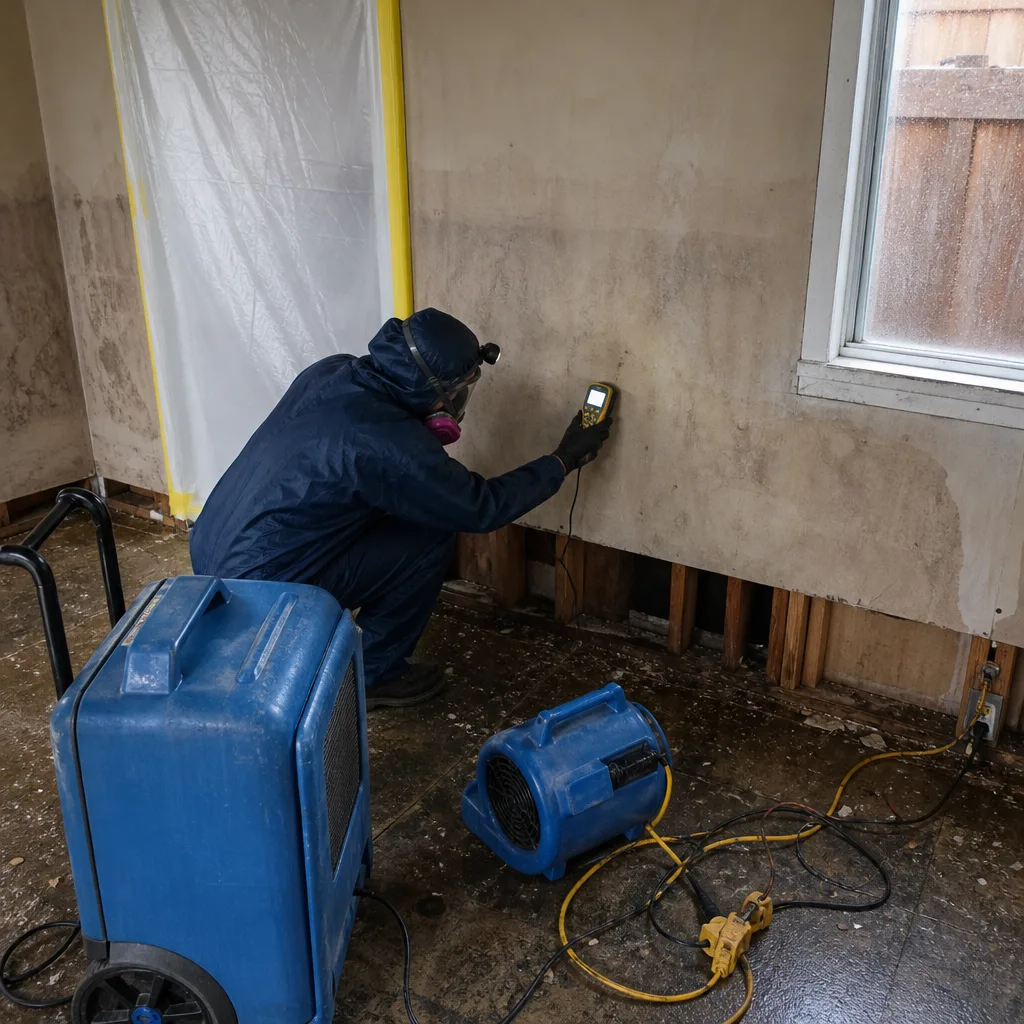
One: reach water inside wall cavities and under flooring. Water does not stay where it lands. It wicks horizontally through drywall, travels along base plates, runs under vinyl plank flooring, and saturates subfloor plywood. A fan blowing across a wall dries the surface paint. The moisture inside the wall cavity, where the studs and insulation live, stays put. That trapped moisture is where mold begins, usually within 48 to 72 hours. A rented dehumidifier positioned in the middle of the room creates a drier pocket of air around itself, but it does not create the directed pressure differential required to pull water vapor out of an enclosed cavity. The equipment we operate from Dri-Eaz and Phoenix moves air at volumes designed specifically for structural drying, not room freshening.
Two: dry to measurable moisture-content targets. This deserves its own section, and it gets one below. The short version: “feels dry to the touch” is not a measurement. It is a sensation. And your home inspector, your insurer, and a future buyer’s inspector will not accept a sensation as documentation.
Three: address contaminated water safely. Category 2 water (grey water from washing machines, dishwashers, or sump pump failures) and Category 3 water (sewage, flood water from outside, or any water that has been sitting for more than 48 hours) carry bacteria, pathogens, and in the case of flood water, whatever was on the street before it came in. Remediating contaminated water requires containment, disposal protocols, and antimicrobial application. The risk of spreading contamination through the house with fan airflow is real, and it is not something to experiment with. In Santa Clarita, flood water and storm runoff is always Category 3. Always.
Four: produce defensible documentation. This is the one that matters most for your insurance claim and your future home sale. A professional restoration job produces a moisture map, drying logs with daily psychrometric readings, and a final clearance document that says the structure reached the required dryness targets. A DIY job produces a homeowner’s memory and, at best, a photo of a rented machine sitting in a hallway. The photo proves you tried. It does not prove the structure is dry.
We have walked into homes where a well-intentioned homeowner rented equipment for a week, then called us three weeks later because the baseboards were curling and there was a musty smell. By that point, the remediation is more invasive and more expensive than the original drying job would have been. That is not a criticism of the homeowner’s effort. It is a description of what consumer equipment can and cannot do.
California’s Legal Exposure for DIY Restoration
Here is the part most DIY guides skip because they are written by generalists who do not know California real estate law. The relevant statute is Civil Code Section 1102, which governs seller disclosures in residential real estate transactions. When you sell a home in California, you must disclose any known material facts about the property that could affect its value or desirability. A past water leak that you dried yourself is a known material fact if the leak was significant enough to remember.
The practical problem: if you disclose a past water event and a buyer’s inspector finds elevated moisture or mold evidence in the wall cavity, that is a negotiation problem. If you do not disclose the water event and the buyer’s inspector finds evidence of concealed water damage, that is a liability problem. The phrase “I dried it out myself” is not documentation. It is an admission that you have no third-party verification of the structure’s condition.
Santa Clarita’s housing market moves fast, and homes in neighborhoods like Valencia, Saugus, Canyon Country, and Newhall sell at a pace that does not reward lengthy inspection negotiations. Staying ahead of problems with Seasonal Damage Restoration Care for Santa Clarita: Year-Round Homeowner’s Guide can help prevent surprises at sale time. A home with a professional moisture mapping report and a clearance document attached to its disclosure package moves differently than a home where the seller says, in effect, “trust me.”
There is a second angle here that is less obvious but just as real. Insurance policies generally require the policyholder to take reasonable steps to prevent further damage after a covered event. That is true. But the same policies also require that repairs be completed to a professional standard, and insurers can and do deny supplemental claims when amateur repairs fail and cause secondary damage. If you file a water damage claim, dry the house yourself with rental equipment, close the walls, and then file another claim eighteen months later for mold in the same wall cavity, the insurer’s adjuster has a very good argument that the second loss was caused by the first repair being inadequate. That argument typically wins.
What “Drying to Protocol” Actually Means
Trade language often hides a simple idea. In restoration, the phrase “drying to protocol” means drying the structure to a measurable standard that a third party can verify. That standard is the IICRC S500, the restoration industry’s recognized reference for water damage restoration. The S500 establishes specific moisture content targets for different building materials, measured with a moisture meter that penetrates the material or with non-invasive sensors calibrated for the material type.
In plain English: a 2×4 wood stud that has been wet needs to return to a moisture content within a few percentage points of what a dry 2×4 stud in the same wall measures, typically in the low teens depending on the time of year and the ambient humidity in Santa Clarita. Gypsum board that has absorbed water often cannot be saved at all, because gypsum loses structural integrity when saturated, and the S500 standard directs removal rather than attempted drying in most cases. The point is not that you need to know these numbers. The point is that professional restoration crews do, and they document that they reached them.
Psychrometric readings are the specific measurements that matter here. The word is intimidating; the concept is not. Psychrometrics is the measurement of temperature, humidity, and dew point in the air and in materials. A restoration technician takes daily readings during a drying job, adjusts equipment placement and airflow based on those readings, and records everything in a drying log. That log is the document an insurance adjuster, a future buyer’s inspector, and a remodeling contractor will actually accept as proof the structure was dry when the walls went back up.
Most residential water extractions in Santa Clarita run between $2,800 and $6,500 before drying equipment is included, depending on affected square footage, category of water, and whether contents need to be moved or packed out. Drying equipment adds another $125 to $275 per day, and most drying jobs run three to five days. Your insurance covers most or all of this on a covered loss, minus your deductible. The cost of an uninsurable secondary mold problem down the road is, in every case we have seen, higher.
The Honest Cost Comparison: DIY vs Professional
Let’s put real numbers on this, because the DIY math only works under a narrow set of conditions. Here is the honest comparison, using Santa Clarita rental rates and typical professional pricing.
DIY cost for a moderate water event, roughly 100 square feet affected:
- Wet-dry vacuum rental or purchase: $40 to $120 (you probably already own one, but most homeowners do not own an extraction-grade unit)
- Dehumidifier rental, 3 to 5 days: $60 to $120 total for a standard 30 to 50 pint unit
- Air mover rentals, 2 to 3 fans, 3 to 5 days: $90 to $180 total
- Moisture meter, if you buy one: $35 to $80 for an entry-level pin-type meter
- Replacement of materials you will likely need to replace anyway if drying fails: $400 to $1,200 for a section of drywall, paint, and baseboard
- Total DIY hard cost, best case: $225 to $500 if everything goes right.
Now the part that rarely makes it into DIY cost breakdowns: your time. You will spend a minimum of ten to twenty hours between setup, equipment monitoring, emptying water buckets, and the inevitable do-over when the first pass does not work. If you value your time at any reasonable hourly rate, the DIY savings shrink fast.
Professional cost for the same 100-square-foot event:
- Emergency extraction and initial mitigation: $1,200 to $2,200
- Structural drying with commercial equipment, 3 to 5 days: $375 to $1,375 in equipment and monitoring
- Final moisture mapping and documentation: included in the drying package at any reputable restoration company
- Repairs to returned materials: covered under the insurance claim if the loss is covered
- Total professional cost before insurance: $1,575 to $3,575.
- Out-of-pocket cost after insurance on a covered loss: your deductible, typically $500 to $1,500.
The DIY math makes sense only when the affected area is small, the water is clean and fresh, and you are confident the water never reached anything structural. Under 10 square feet: do it yourself. Over 50 square feet or any water touching drywall, flooring, or framing: call a professional, because the insurance math is on your side and the risk math is decisively not.
The Hybrid Approach: When to Split the Work
Here is a strategy most articles do not mention, and it is the one that saves homeowners the most money without gambling with the structure: use a professional restoration company for the high-stakes parts and handle the low-complexity tasks yourself.
You can reasonably handle:
- Moving and packing out your own contents from unaffected rooms before the crew arrives
- Protecting furniture with foil blocks or moving blankets
- Removing and washing your own textiles like curtains, bedding, and throw pillows if they are only lightly damp
- Photographing the damage thoroughly before any work begins, for your own insurance file
- Monitoring the visible areas between technician visits
You should not handle:
- Applying antimicrobial or biocide products to structural materials
- Cutting into walls or pulling up flooring to expose hidden moisture
- Operating any drying equipment in a home with occupants present if the water is contaminated
- Deciding on your own that the structure is dry enough to close up
Most restoration companies in Santa Clarita, including our team at Marsh Water Damage Santa Clarita, will work with a homeowner who wants to handle contents and leave the structure to the professionals. We have no reason to object. In fact, a homeowner who packs out their own closet before we arrive reduces hours on the job and the final bill. What we will not compromise on is the documentation: the moisture mapping, the drying log, and the final clearance are done by us, signed, dated, and provided to you in writing. If you want to hang your own drywall after our drying cycle is complete and we have cleared the structure, that is your call and your savings.
One caution if you take the hybrid route: check with your restoration company and your insurer before doing any demolition yourself. Some insurers require that removal and disposal be performed by a licensed contractor for the claim to pay out at full value. Find out before you pull the first piece of baseboard.
Why Moisture Mapping Is the Documentation That Matters
Of everything on this page, this is the section that most directly separates professional restoration from a rented machine and a hope. Moisture mapping is the process of measuring moisture levels across every affected surface in the home, recording those measurements on a diagram of the floor plan, and repeating the measurements at defined intervals until every area meets the drying standard.
A moisture map looks like a floor plan sketch with numbers written at each measurement point. Those numbers correspond to moisture content or moisture readings, depending on whether the technician used a penetrating meter on wood or a non-penetrating sensor on drywall and tile. The map serves three purposes. It tells the drying team where the water actually is, not just where you can see it. It creates a baseline so progress can be measured objectively. And it becomes a permanent record of the structure’s post-drying condition.
That record is the thing that matters to your insurance adjuster, who wants to know the loss was properly mitigated before repair. It is the thing that matters to a future buyer’s home inspector, who will run their own moisture meter in the areas you disclose as previously wet. And it is the thing that protects you from a disclosure lawsuit under Civil Code 1102 if you sell the home later. A moisture map plus a drying log plus a final clearance letter is the difference between a documented repair and a verbal assurance. Verbal assurances do not hold up in escrow.
Common Mistakes to Avoid
- Ventilating with outside air during a Santa Clarita summer. When it is 95 degrees with 8 percent humidity outside, opening windows feels right. Inside a water-damaged room, you are pulling dry hot air in, which is fine, but you are also creating unpredictable airflow and potentially spreading spores from already-damp materials. Controlled airflow beats open windows every time.
- Using a household dehumidifier and thinking it is enough. A 50-pint home dehumidifier from a hardware store pulls about 10 to 14 pints per day under real-world conditions. The commercial units we run pull 80 to 130 pints per day. In a wall cavity drying scenario, that gap is the difference between hitting target moisture in four days and never hitting it at all.
- Assuming tile means the subfloor is safe. Tile and grout are not waterproof. Water runs through grout lines, under the tile, and into the substrate or subfloor below. We see this regularly in Santa Clarita homes where a slab leak under a tiled entryway went unnoticed for weeks because the tile looked fine.
- Pulling up carpet and padding but leaving the tack strip and baseboard. The padding is a sponge, yes. But the bottom edge of the drywall behind the baseboard has likely wicked water too, and the tack strip is nailed into the subfloor. If you do not address those, you close the floor back up over a wet subfloor and wet drywall in the same week.
- Drying one room while ignoring adjacent spaces. Water travels through wall plates and under flooring into adjacent rooms. A water event in a Valencia master bath commonly shows elevated moisture in the closet behind the shower wall and in the hallway floorboards outside the door. If you only dry the visible room, you fix half the problem and call it done.
- Believing “no visible mold” means no mold problem. Mold growth begins inside wall cavities and under flooring where no light reaches, and the first visible evidence usually appears weeks after the spores have already established. By the time you see it, the colony has been growing for a while.
When to Call a Professional
Call a professional restoration company immediately if water has touched drywall, insulation, cabinetry, flooring, or framing, regardless of square footage. Following a Water Damage Restoration Maintenance Checklist for Santa Clarita Homeowners can help you spot risks before they become emergencies. Call immediately if the water is from a sewage backup, a toilet overflow, a dishwasher that has been draining poorly, or any outdoor flooding. Call immediately if the water event is on a second floor or above a finished ceiling, because water moving through floor joists into the ceiling below is a structural drying scenario, not a surface cleanup. And call immediately if you cannot determine where the water came from, because a supply line leaking inside a wall in Santa Clarita will keep leaking until someone finds it.
Marsh Water Damage Santa Clarita offers free estimates in Santa Clarita, and a live person answers the phone 24 hours a day, every day. Call (661) 347-1348 and you will get a straight answer about whether you need professional help or whether a towel and a fan will do the job. We will tell you the truth either way.
Frequently Asked Questions
Most residential water extractions in Santa Clarita run between $2,800 and $6,500 before drying equipment, and drying equipment adds $125 to $275 per day for three to five days on a typical residential job. On a covered insurance loss, your out-of-pocket cost is usually just the deductible, typically $500 to $1,500. Call (661) 347-1348 for a written quote on your specific situation. Estimates are free.
You can dry small, clean-water surface spills under about 10 square feet yourself if you catch them within the hour. Rental equipment will not reach moisture inside wall cavities or under flooring at the airflow volumes required to meet the IICRC S500 standard, which means the structure will not be dry enough for documentation purposes even when it feels dry on the surface.
On a covered water loss, your homeowners insurance typically covers professional extraction, structural drying, and direct repairs, minus your deductible. The documentation that a professional restoration company provides, including the moisture map and drying log, is what actually makes the claim process go smoothly with your adjuster. If you dry it yourself and something fails later, the follow-up claim is harder to win.
Marsh Water Damage Santa Clarita answers every call with a live person, 24 hours a day, and we dispatch crews from within Santa Clarita, so response times are typically measured in hours, not days. Water damage does not wait for weekday business hours, and neither do we.
Threshold Verified is the safety protocol our technicians follow on every visit: every crew member is background-checked, identity-verified, and sent to you by name and photo before the visit, then shows a photo ID badge at your door. For homeowners who are alone, parents with young kids, or older adults, knowing exactly who is knocking before they arrive matters as much as the quality of the drying work.
If the water was clean, caught quickly, and confined to non-porous surfaces, a thorough cleaning with a disinfectant is often enough. If the water was contaminated, soaked into porous materials like drywall or carpet, or sat for more than 48 hours, professional mold remediation is the correct course, because surface cleaning cannot reach spores growing inside a wall cavity. A professional assessment will tell you which scenario you are in.
The Bottom Line
DIY water damage restoration in Santa Clarita is the right move for small, clean, surface-level spills caught within the hour. It is the wrong move for anything that has touched drywall, flooring, insulation, or framing, anything involving contaminated water, or anything you plan to disclose honestly when you sell the home. The professional route costs more on the front end, but insurance shifts most of that cost away from you, and the documentation that comes with professional drying protects you in the claim, at the sale, and in the years between. The structure of your home is not where you want to learn from a mistake.
If you have water damage in Santa Clarita and you are unsure which side of the line you are on, call (661) 347-1348. A live person answers, the estimate is free, and the price for any work is written down before anything begins. You can also learn more about our Marsh Water Damage Santa Clarita home services, our Water Damage Restoration in Santa Clarita process, our Mold Remediation in Santa Clarita standards, or our Storm Damage Restoration in Santa Clarita capabilities.
Written by Tobias Reyner, Owner at Marsh Water Damage Santa Clarita, serving Santa Clarita since 2005.
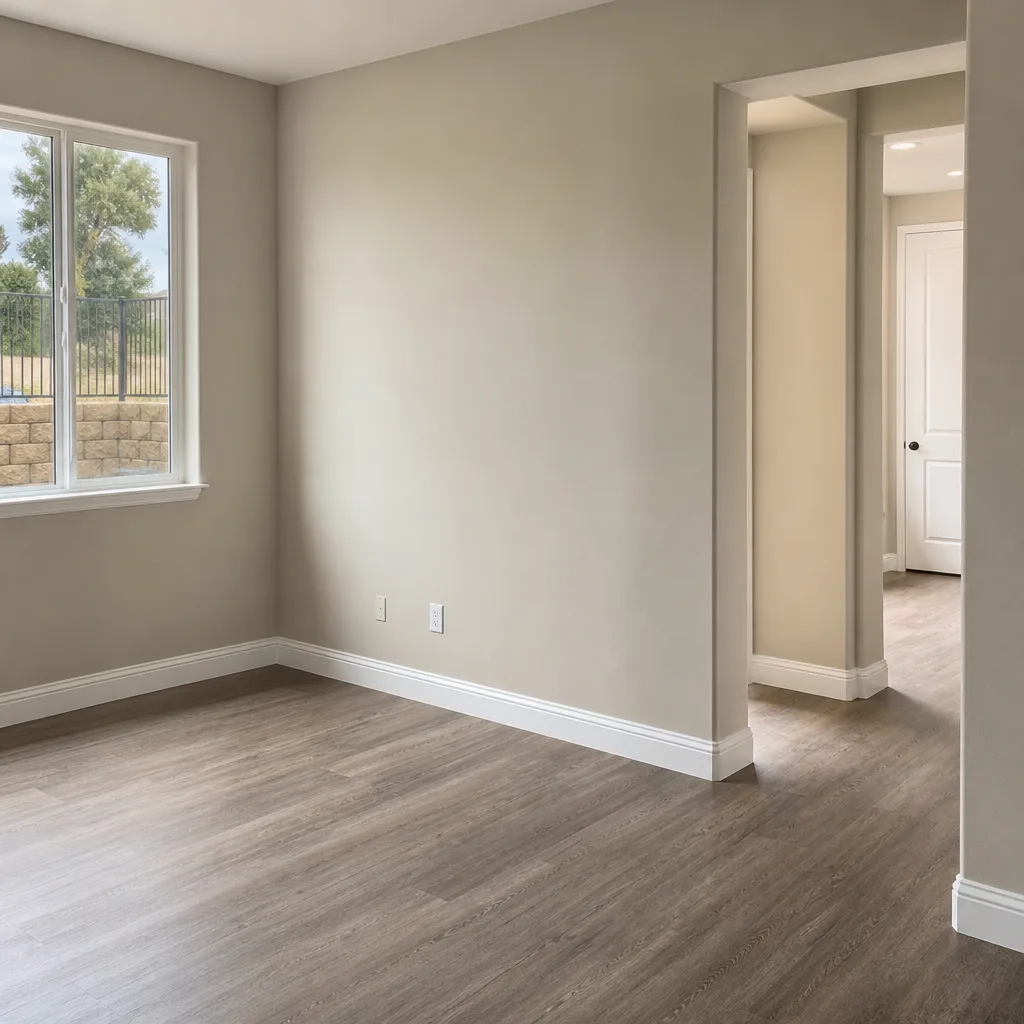
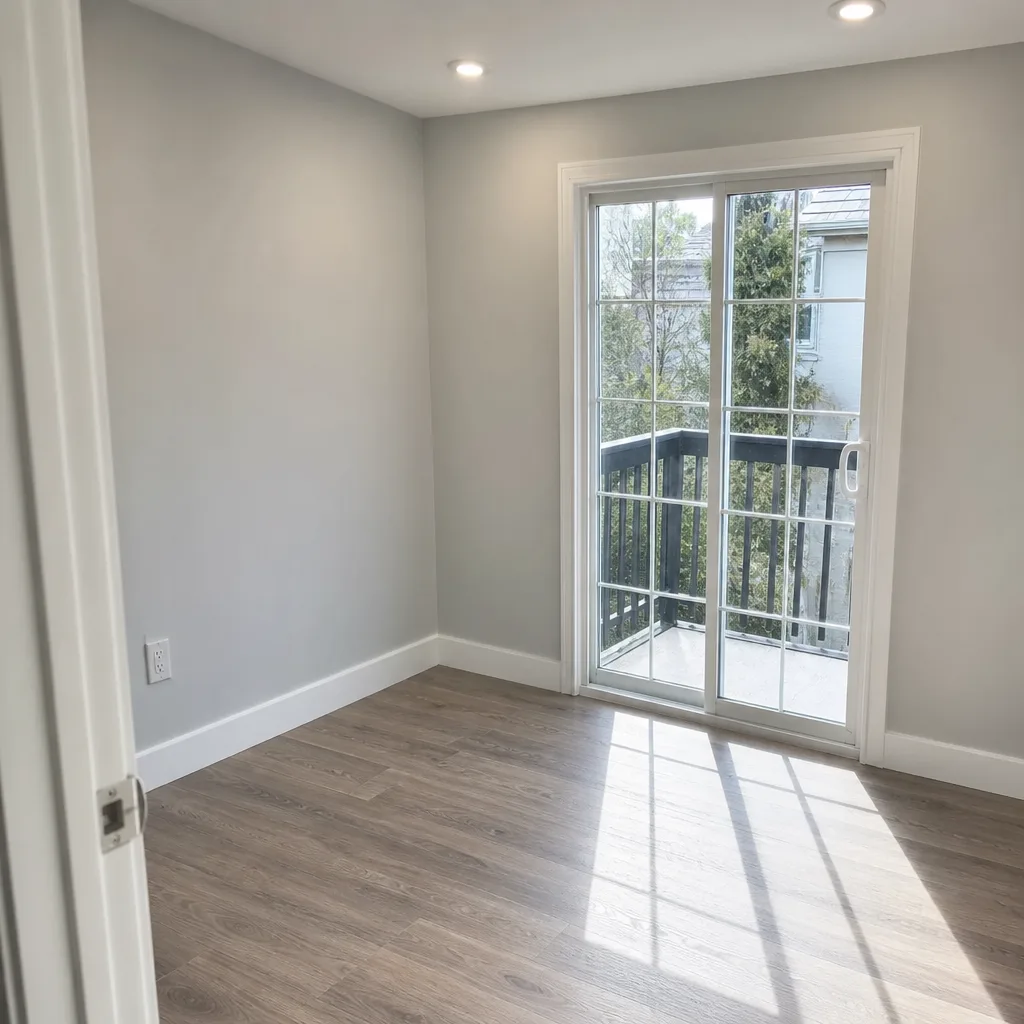
See the difference
 Before
 After
After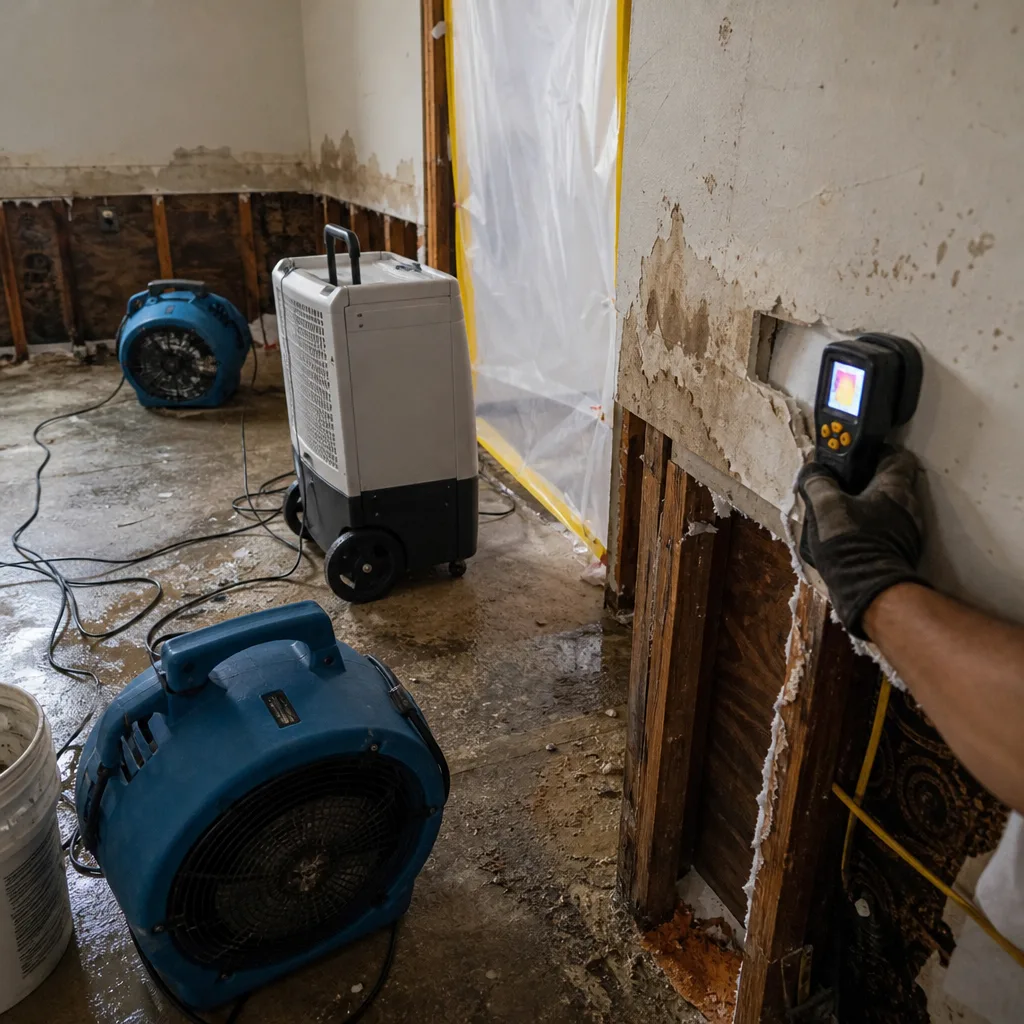 Before
 After
After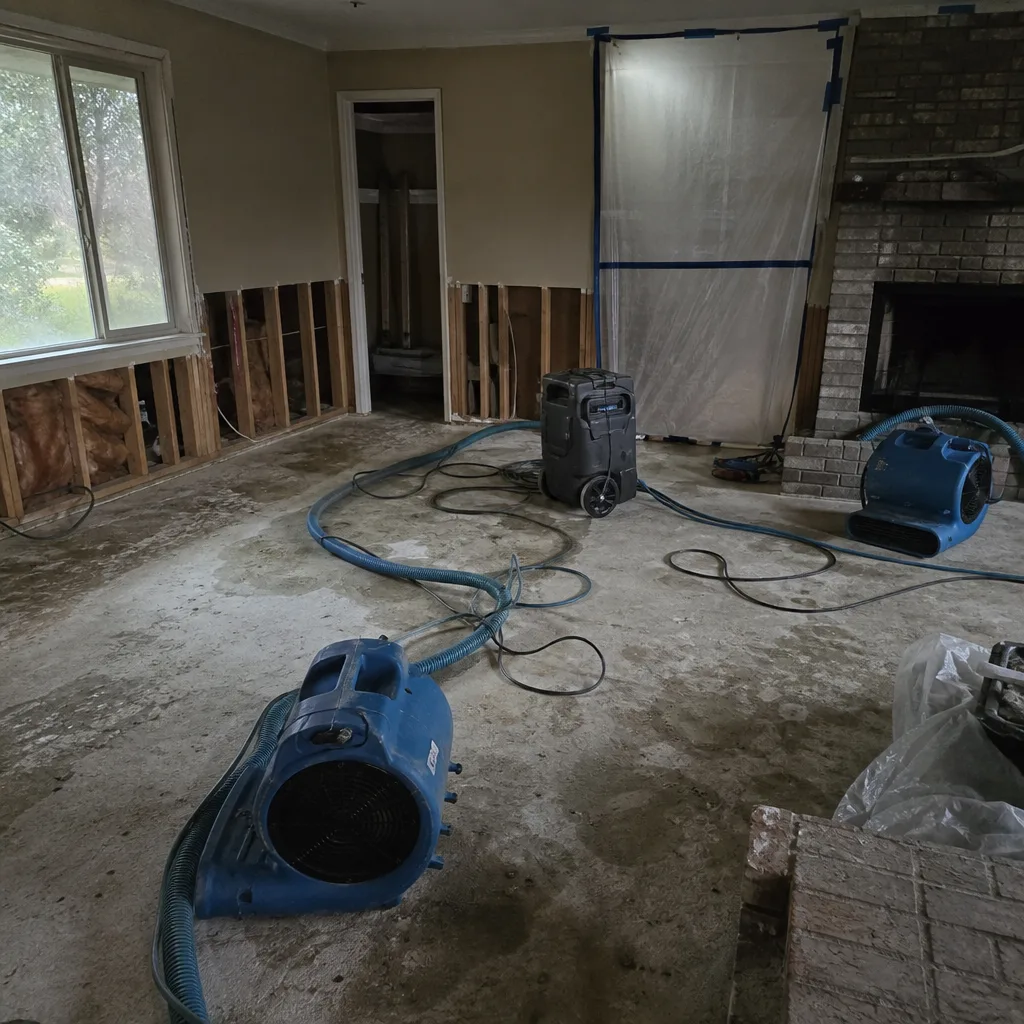 Before
 After
After