
 Water damage drying
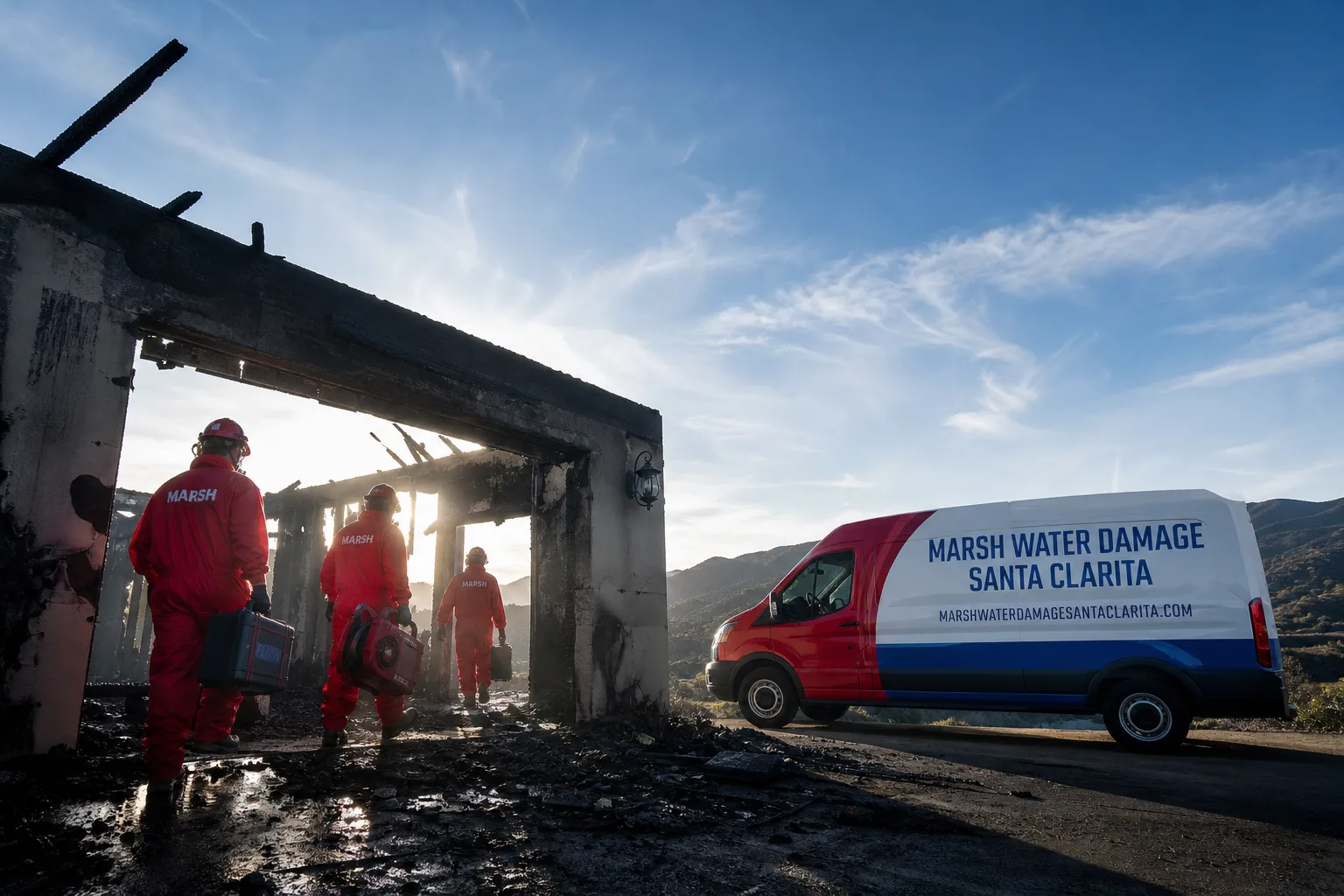
 Fire & smoke cleanup
 Mold remediation
 Storm response
 Sewage cleanup
 Reconstruction
Free visual inspection and a written scope of work before any mitigation begins - photos, moisture readings, and drying logs go in your claim file
The scope we write is the scope we bill. Anything new gets shown to you, in writing, before we touch it.
Get your free estimateFast, Reliable Water Damage Restoration Across Mission Hills
Water damage in Mission Hills rarely announces itself politely. It starts as a soft brown stain on a ceiling, a musty smell near the baseboards, or a slow drip you only hear at 2 a.m. When you call us, a live person answers immediately and we dispatch a crew to your door, badged and background-checked under the Threshold Verified standard, with your technician’s name and photo sent to you before we arrive. Most Mission Hills calls get a truck rolling within 60 to 90 minutes. Call (661) 347-1348 and we’ll start the same conversation we’ve had with hundreds of San Fernando Valley homeowners: what’s wet, where it came from, and exactly what it will take to dry it out right.
Why Marsh Water Damage Santa Clarita Is Mission Hills’s Preferred Water Damage Restoration Company
Mission Hills homeowners tend to ask sharper questions than most. These are custom and mid-century homes, original woodwork, hillside setbacks, and roofs that have seen decades of sun and rain. They want to know who is walking through the door before the knock happens. In business since 2005 as part of the Threshold Group family of restoration companies, we built our reputation in the San Fernando Valley on that exact concern. Every technician is background-checked, identity-verified, uniformed, and photo-badged. You get a name and a photo before the visit. The tech at your door shows a photo ID badge every single time.
Our crews work in Mission Hills regularly and they know the streets: Sepulveda Boulevard corridor, the winding roads off Rinaldi, the homes along Woodley Avenue and the ridgelines where drainage gets tricky after a hard rain. We’ve dried out ranch-style homes from the 1950s with original oak floors, mid-century moderns with flat roofs, and hillside builds where the foundation moves a little more each year. The response to Mission Hills from our Los Angeles dispatch is consistently under 90 minutes for emergency water extraction. Local knowledge matters when a low-slope roof pools water against a parapet wall and nobody noticed until the ceiling let go at 3 a.m.
Restoration work we handle
Water Extraction in Mission Hills
Water extraction is the first and most time-sensitive step in any Mission Hills water damage response, and it means physically removing standing water from floor coverings, wall cavities, and subfloor spaces before drying equipment even goes in. On a Mission Hills hillside home, this step is rarely straightforward because water follows the subtle slope of the pad and pools where the floor isn’t level, often against the downhill wall or into rooms you’d never expect. Most residential water extractions in this area run between $450 and $1,200 before drying equipment is set, depending on the square footage affected and the water category involved.
Extraction on Sloped Slabs and Split-Levels
Split-level and hillside Mission Hills homes have floor planes that don’t drain uniformly. We use truck-mounted and portable extraction units, including XPOWER and Injectidry equipment, to pull water from carpet, pad, hardwoods, and concrete. In the wood-frame construction so common here, extraction buys back time for the structural lumber underneath before saturation reaches the point of no return for floor coverings.
When Extraction Alone Isn’t Enough
If Category 2 water, the technical term for water from sources like failed roofs or overflowing appliances that has picked up contaminants, has sat for more than a few hours, extraction is only the opening move. We check with moisture meters and thermal imaging to see how far water traveled through wall cavities and along sill plates. Mission Hills homes with original framing need that deeper read because hidden migration behind drywall and under cabinets is where secondary damage starts.
Emergency Water Removal in Mission Hills
Emergency water removal in Mission Hills is the service you need when water is actively entering the home and every minute counts. A flat roof that finally fails during a winter storm, a burst supply line in the wall, a water heater that lets go in the garage and floods into the living space. Emergency water removal in Mission Hills runs between $600 and $1,800 for the initial response and extraction in most homes, with the higher end reserved for hillside homes where access is tighter and extraction takes longer. We run this as a true 24/7 operation: live dispatch, no voicemail tree, no callback queue.
Storm Response on the Ridgelines
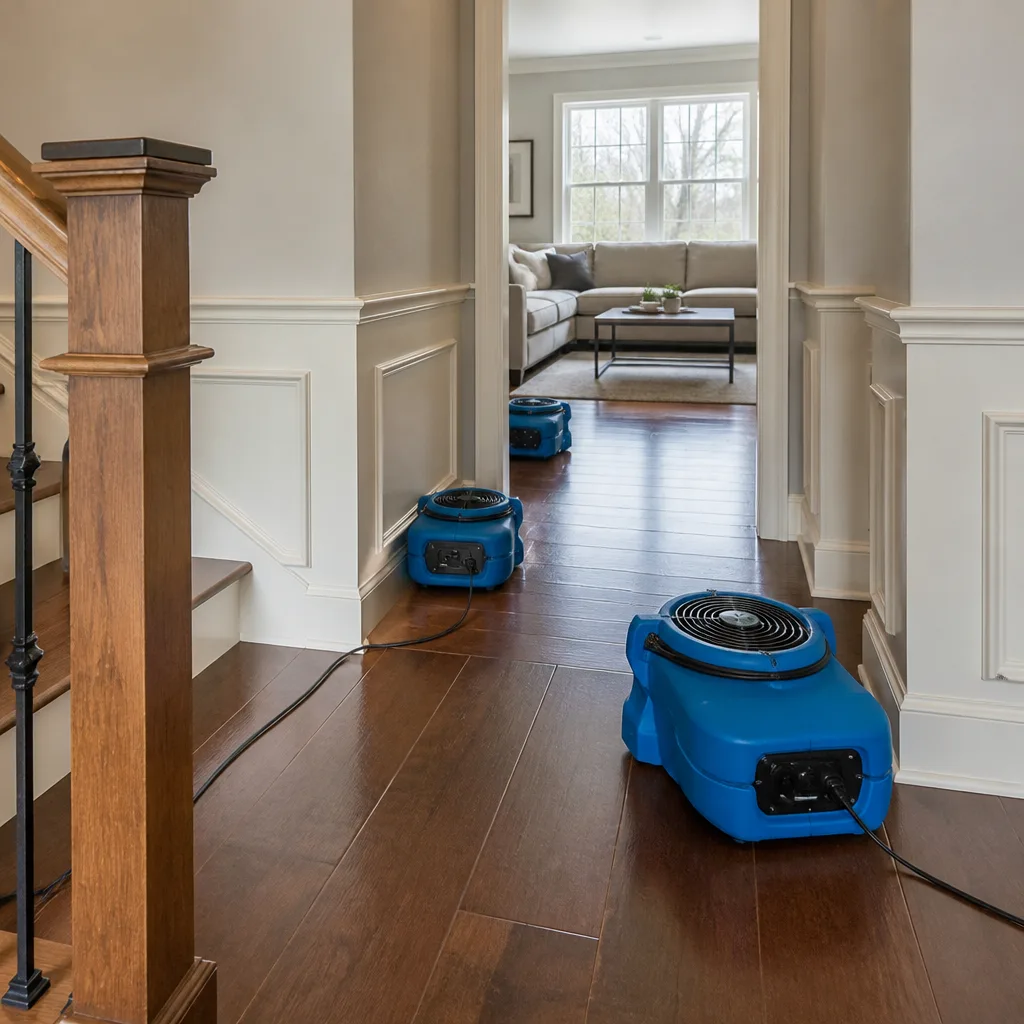
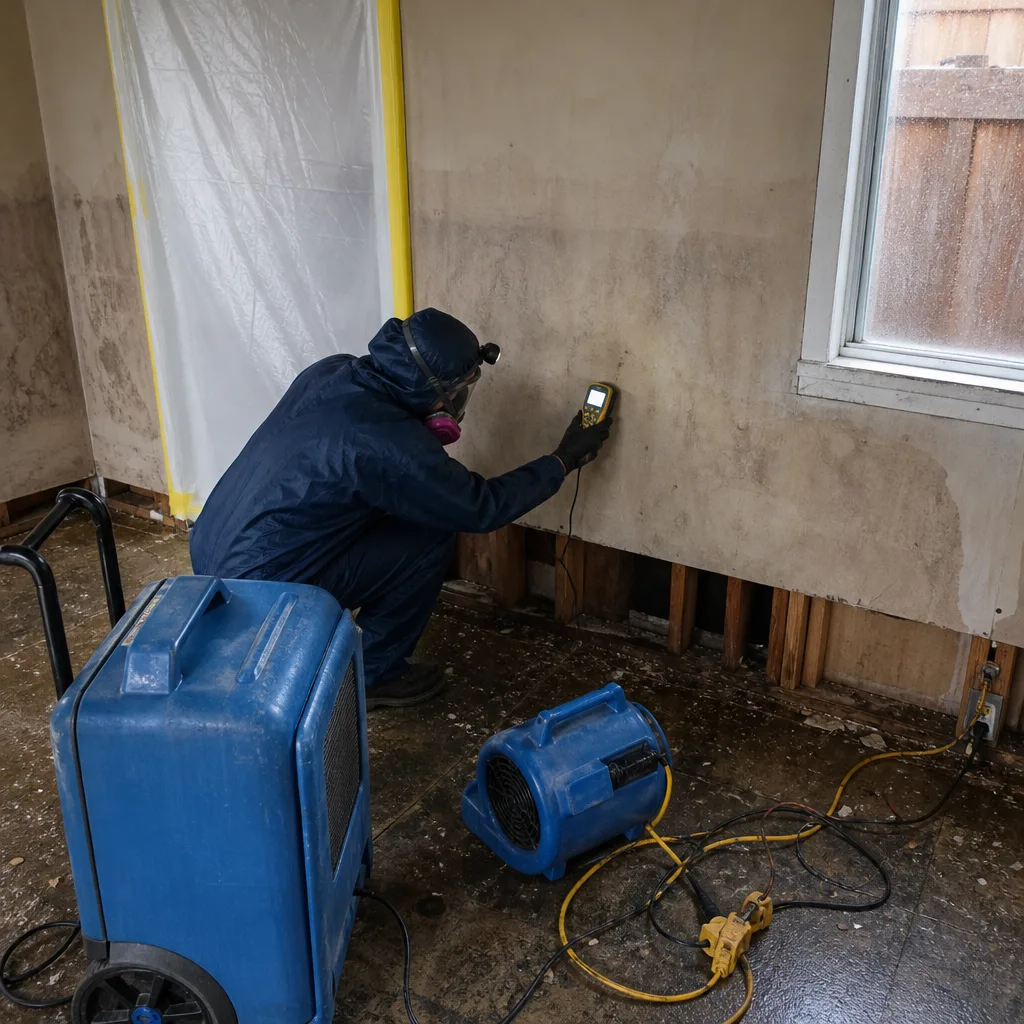
During heavy rain events, the streets above Rinaldi and around the Sepulveda pass can see pooling water against hillside cuts. Our crew responded to a water damage call on Woodley Avenue in Mission Hills, where a 1970s hillside ranch home had a failed flat roof that pooled water during the first heavy winter storm. We used thermal imaging and moisture mapping to trace the Category 2 water that had migrated through the ceiling and into the original wood-frame wall cavities. We set up containment, ran Dri-Eaz dehumidifiers and XPOWER air movers around the clock, and performed antimicrobial treatment before restoring the ceiling to pre-loss condition, all while protecting the homeowner’s custom trim and mid-century built-ins.
Burst Pipes and Appliance Failures
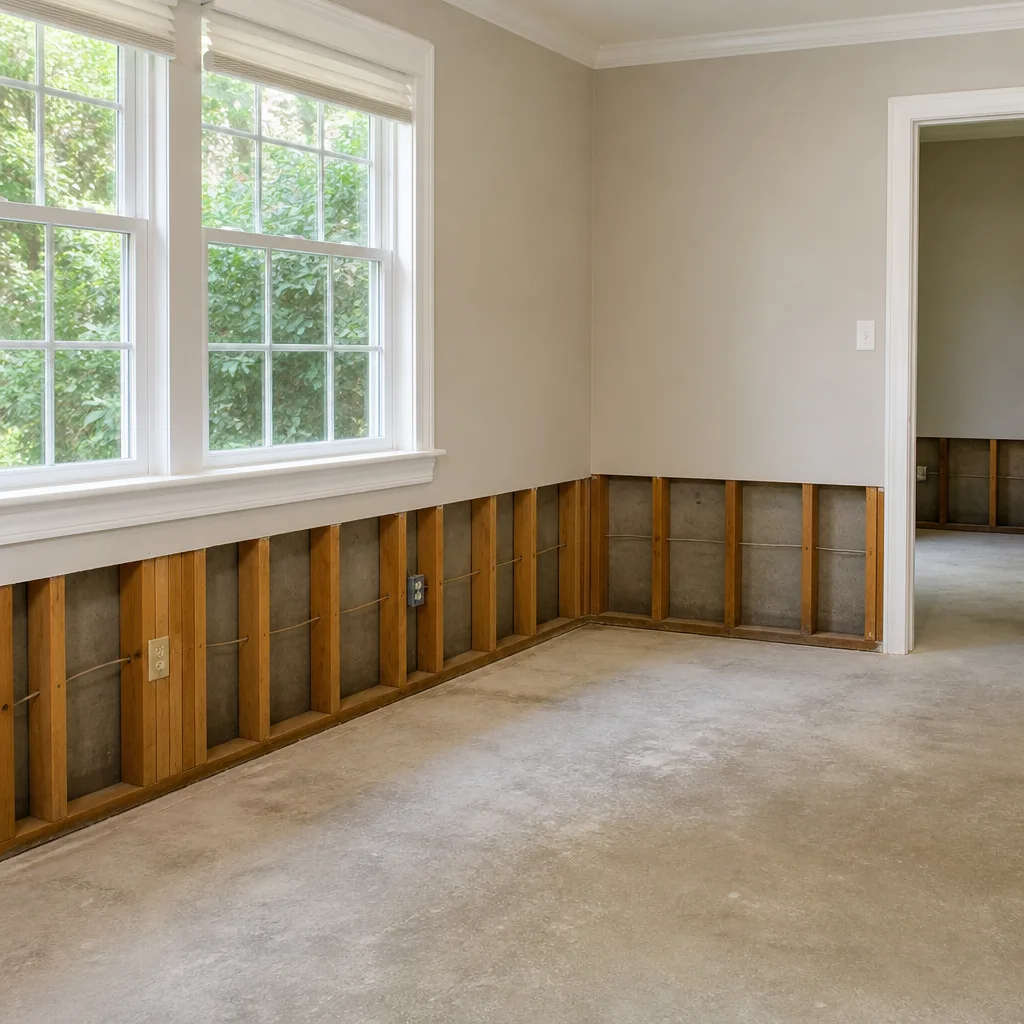
A burst pipe inside a Mission Hills wall delivers gallons per minute into places you can’t see. Emergency water removal starts with shutting off the source, then moves to containment, extraction, and controlled demolition of only what can’t be dried. We write the scope and the price before we cut anything. Every job, no exceptions.
Trusted Brands We Service in Mission Hills
Mission Hills homes carry equipment and finishes from brands that appear less in spec sheets and more in original building plans. We service and restore around Sub-Zero, Viking, and Thermador appliance lines when water damage originates from a failed supply line or a cracked fixture. For drying, we run Dri-Eaz dehumidifiers paired with XPOWER air movers, the same combination used in commercial losses and hospital projects. Injectidry wall cavity drying systems get into the spaces behind original plaster and mid-century wood paneling without tearing it all out. We keep common parts and drying consumables stocked for fast turnaround in Mission Hills, so a snapped supply line doesn’t leave a kitchen dark for a week.
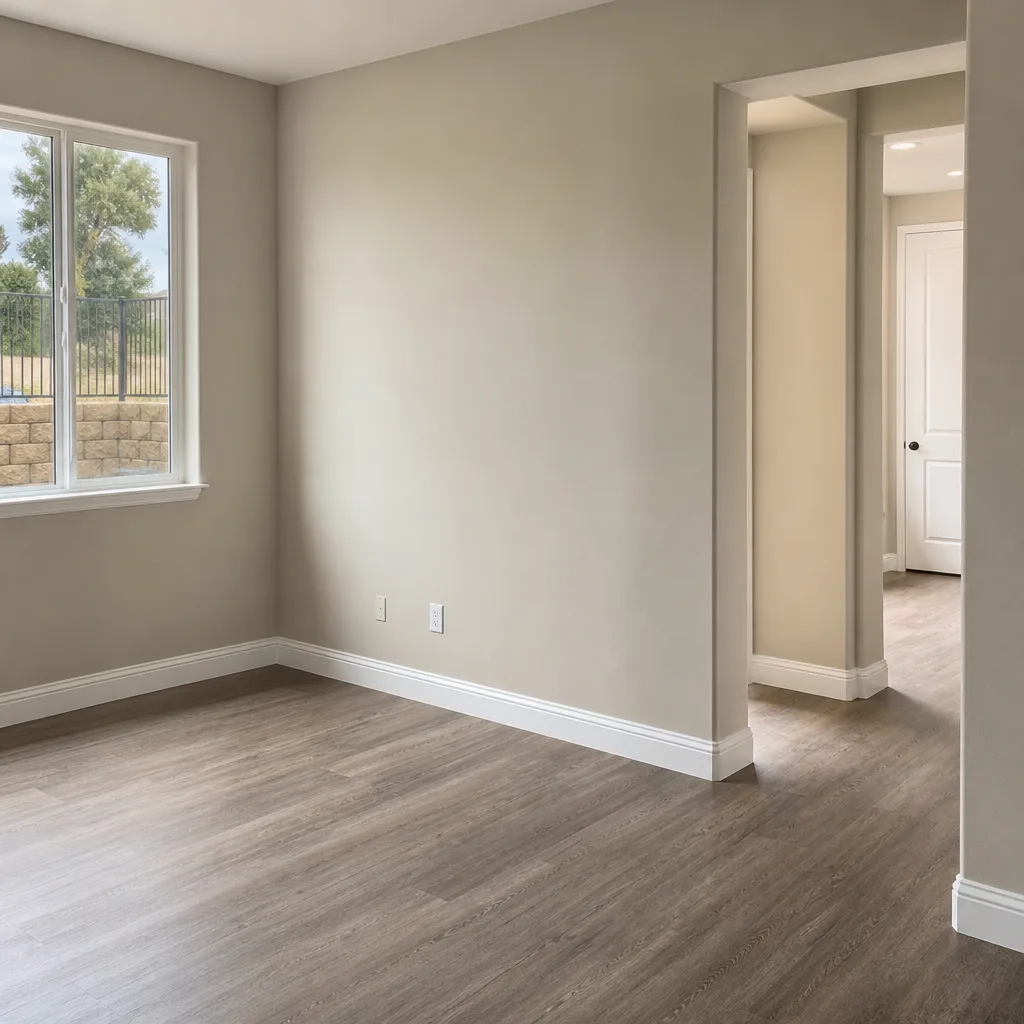
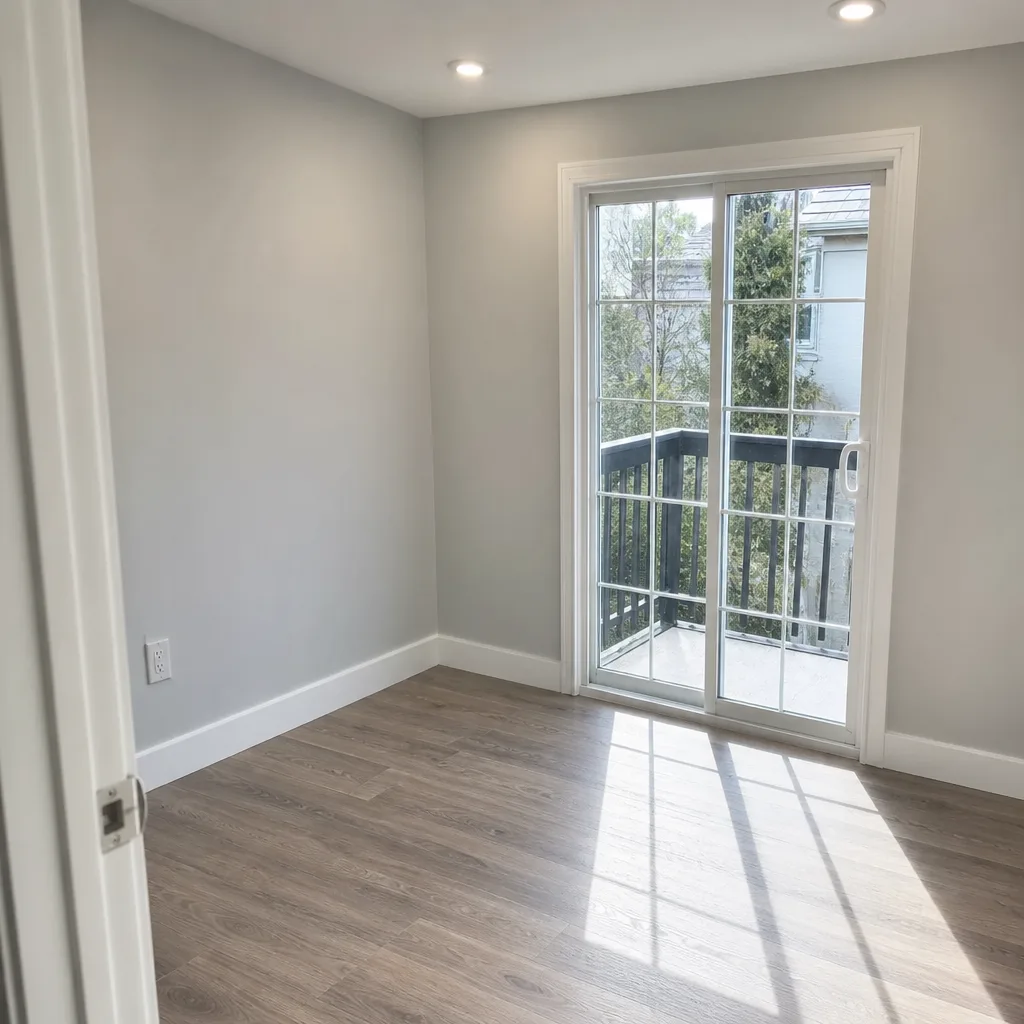
See the difference
 Before
 After
After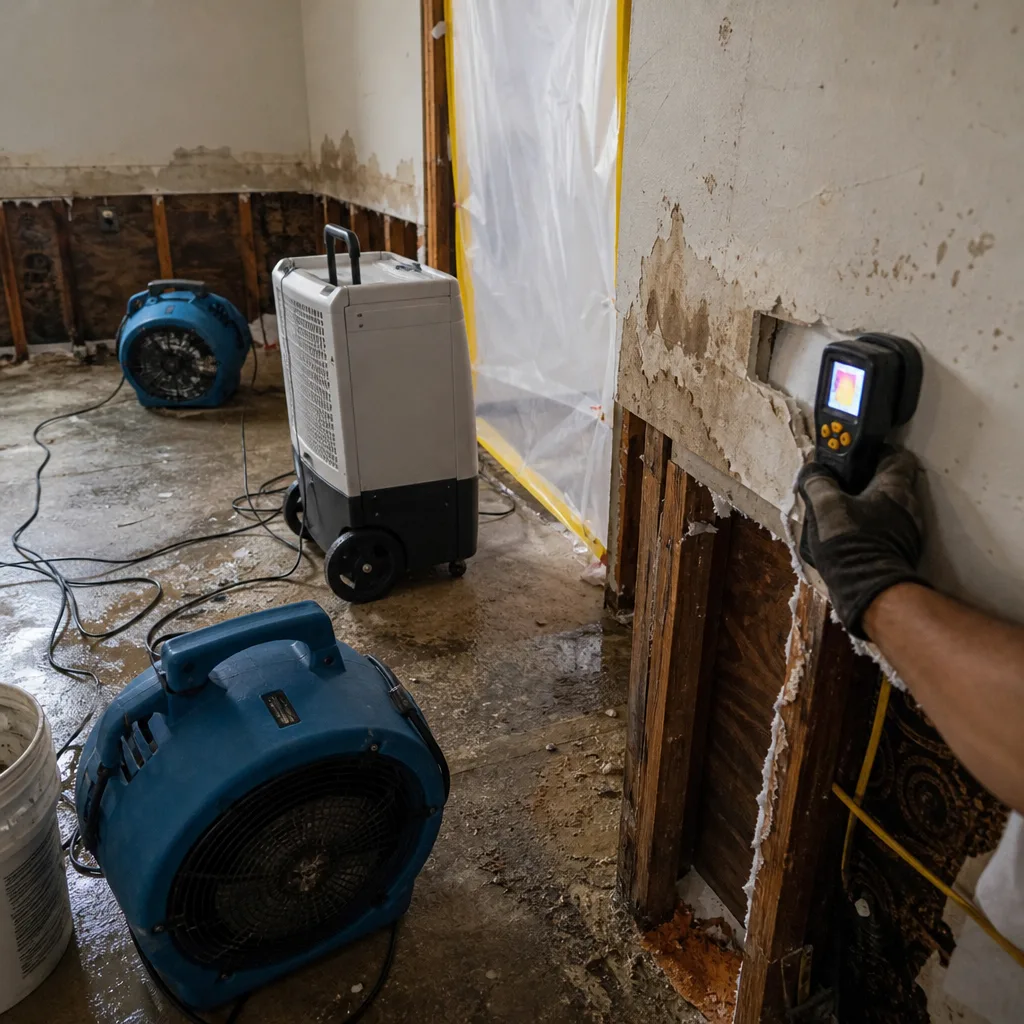 Before
 After
After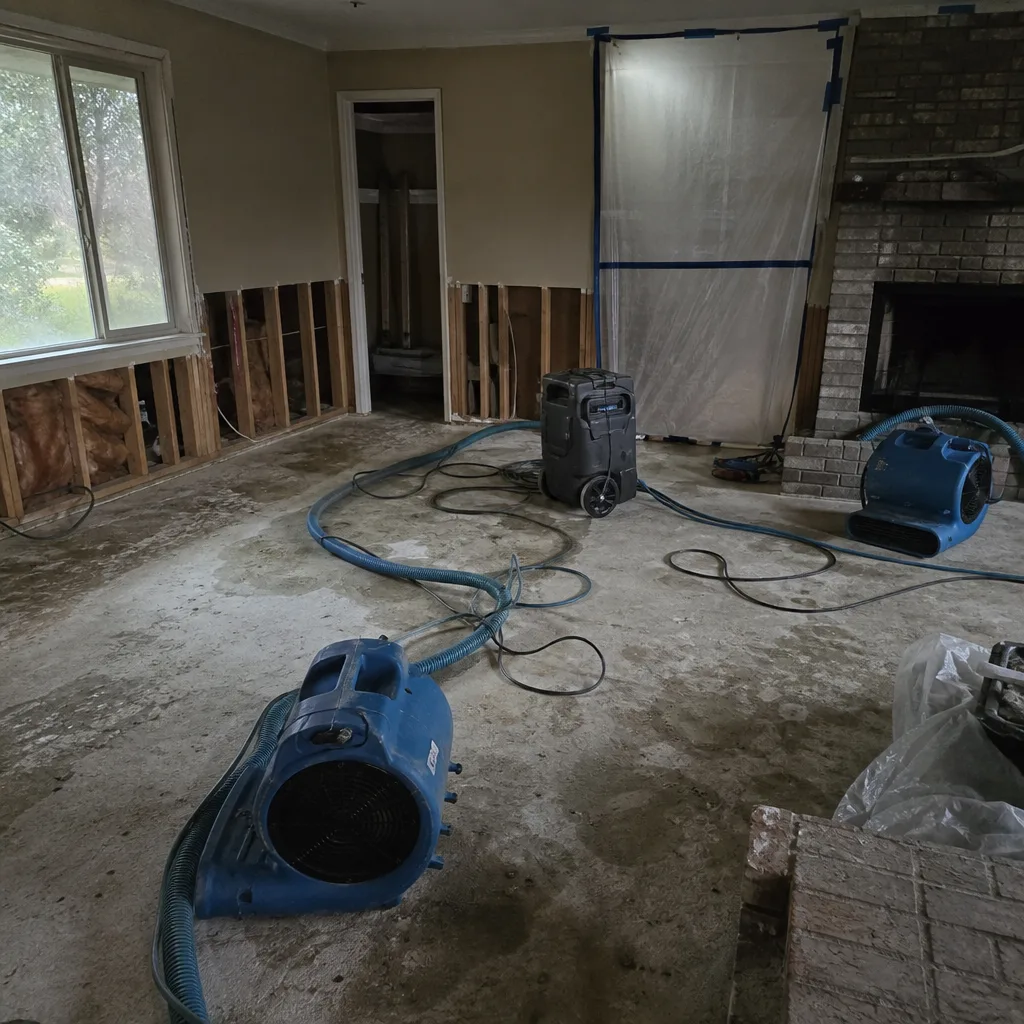 Before
 After
AfterCommon Water Damage Restoration Problems We See in Mission Hills Homes
- Flat and low-slope roof pooling: Many Mission Hills homes, especially mid-century moderns built from the 1950s through the 1970s, have flat or barely sloped roofs that hold water during winter storms. The first visible sign is usually a ceiling stain, but by then the framing and insulation above have been wet for days or weeks.
- Hillside foundation and deck ledger cracks: Soil movement on sloped lots opens hairline cracks in foundations and at deck ledger boards where they bolt to the house. These cracks let water in slowly during wet winters, and standard drying plans that only address the visible puddle miss the slow intrusion behind the stucco.
- Skipping containment during mitigation: Mission Hills homes often have original wood doors, built-in cabinetry, and custom trim. Without proper containment, dust and damp air from the affected room spread into those finishes and cause swelling, warping, or mold you won’t see for months.
- Slow leaks from aging plumbing in slab and raised foundations: The 1960s and 1970s copper supply lines common in Mission Hills are nearing the end of their service life. Pinhole leaks behind walls or under floors go unnoticed until the drywall softens or the hardwood starts cupping.
Pricing for Water Damage Restoration in Mission Hills, CA
We Also Serve Cities Near Mission Hills
If you’re just outside Mission Hills, we also run crews in San Fernando, Granada Hills, Panorama City, and Sylmar. The same equipment, the same Threshold Verified technician standard, and the same written-price guarantee apply across the entire service area. You can learn more about our approach on the Water Damage Restoration page, or see how we serve the wider community on our Mission Hills page.
Serving Mission Hills, CA - Our Local Coverage Area
We’re based in the Mission Hills area and know this community well. Use the map below to see our service coverage - if you’re nearby, we can almost certainly help.
FAQs About Water Damage Restoration in Mission Hills
Call immediately. Within the first four to six hours, water that has entered a Mission Hills ceiling cavity is still largely contained by the drywall, but once it saturates through into wood framing and insulation, the damage escalates quickly. Call (661) 347-1348 as soon as you see staining or dripping. A live person answers, and we dispatch from our Los Angeles office to Mission Hills well within the hour in almost all cases.
Yes. A hillside foundation crack lets water in slowly and at an angle, often following the contour of the soil against the wall. We map it with moisture meters and thermal imaging before setting equipment, because the water travels along sill plates and compaction lines rather than pooling in one flat spot. The drying plan accounts for that slope.
Roof leaks are almost always Category 2 water, which means it has picked up contaminants from the roofing material, insulation, and dust in the ceiling cavity. It isn’t sewage (that’s Category 3), but it still requires antimicrobial treatment on affected surfaces and proper containment so it doesn’t spread into clean areas of the home.
In most cases, yes. We use Injectidry wall cavity drying systems that push dry air behind the paneling without removing it, which lets the original material dry in place. If water sat long enough to delaminate the veneer or start dry rot, we’ll show you what we found and give you a written scope before any removal happens. The goal is always preservation first.
Because the low-slope and flat roofs common in Mission Hills hold water differently than pitched roofs do. Water pools against parapets and drains slowly, working its way through micro-cracks in the roofing membrane over years. The first heavy storm of the wet season finally pushes enough water through to stain the ceiling. What you’re seeing in November has usually been building since the previous spring. Call (661) 347-1348 for a free estimate, and we’ll trace it back to the source.
Written by Tobias Reyner, Owner at Marsh Water Damage Santa Clarita, serving Mission Hills since 2005.