
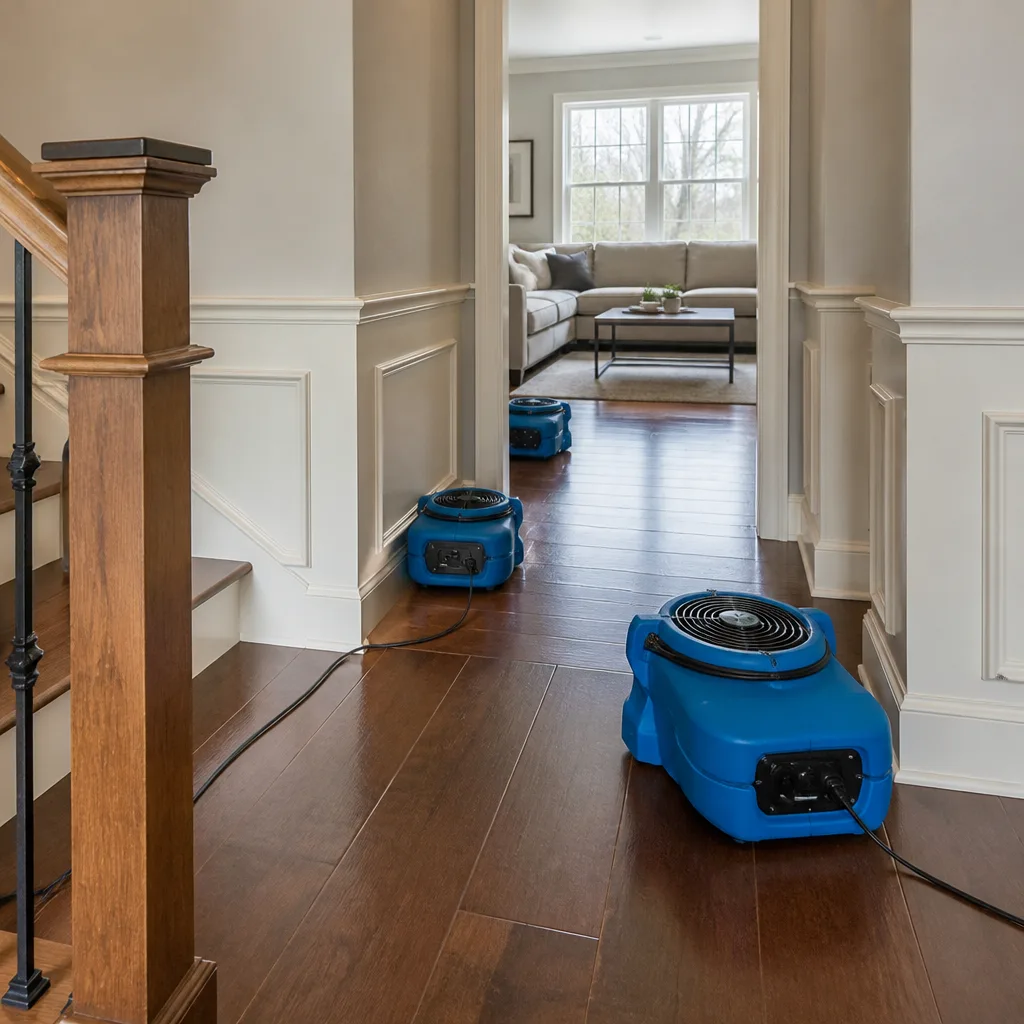
 Water damage drying
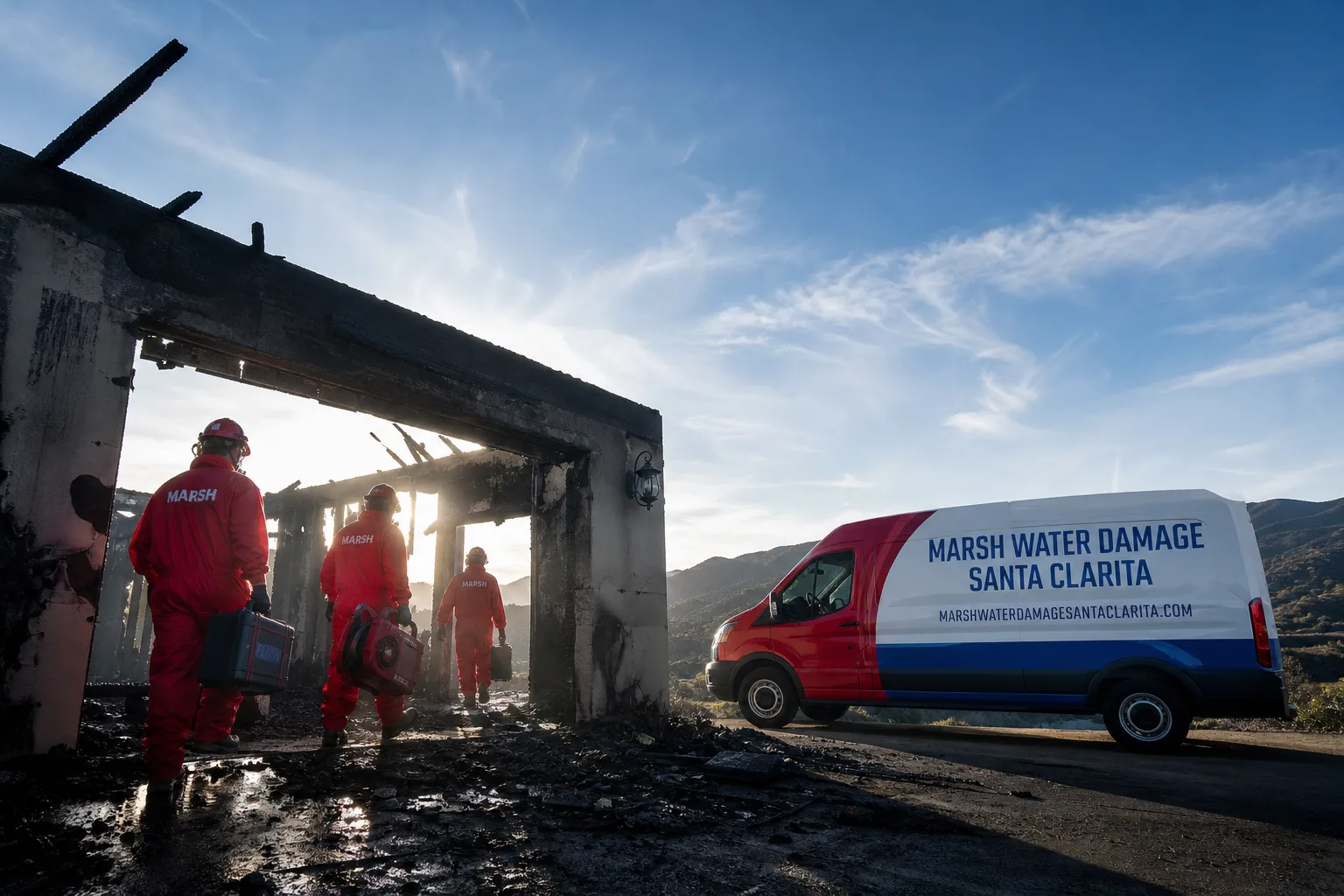
 Fire & smoke cleanup
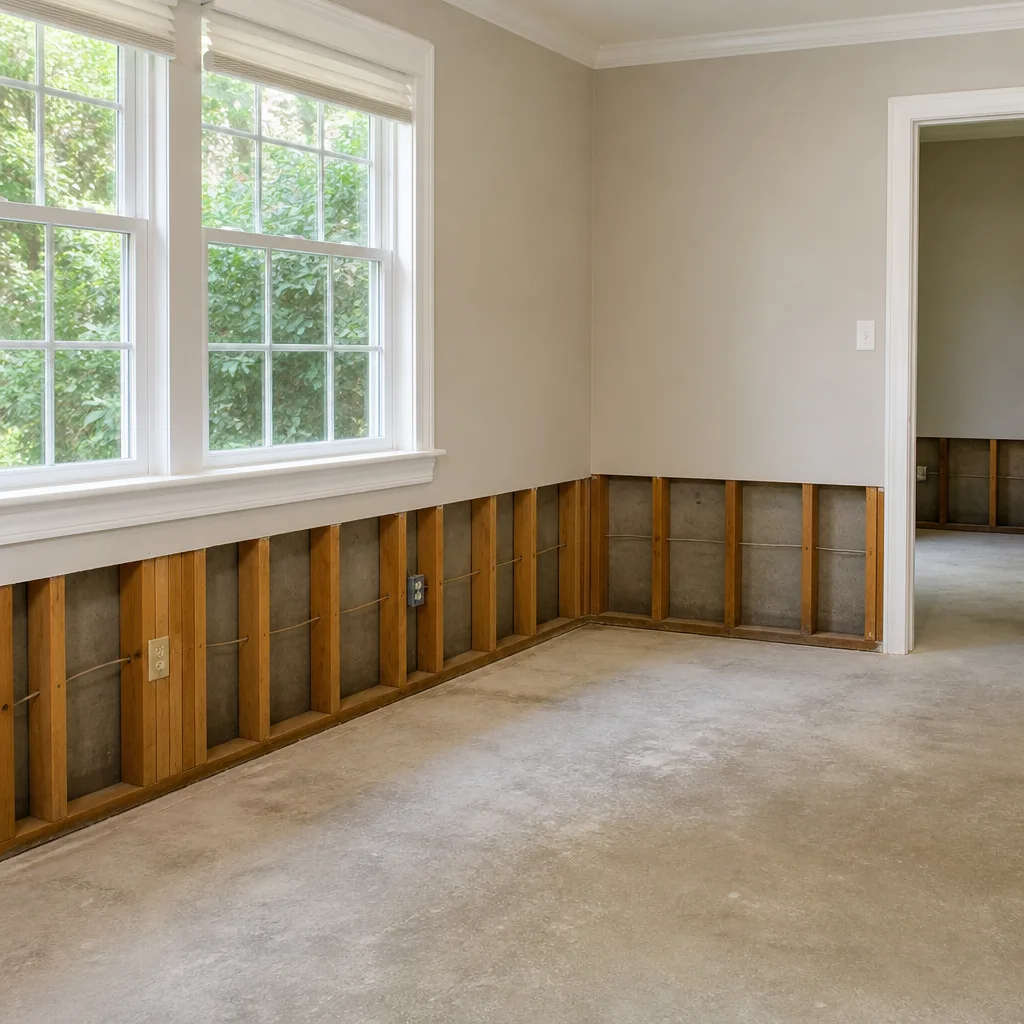 Mold remediation
 Storm response
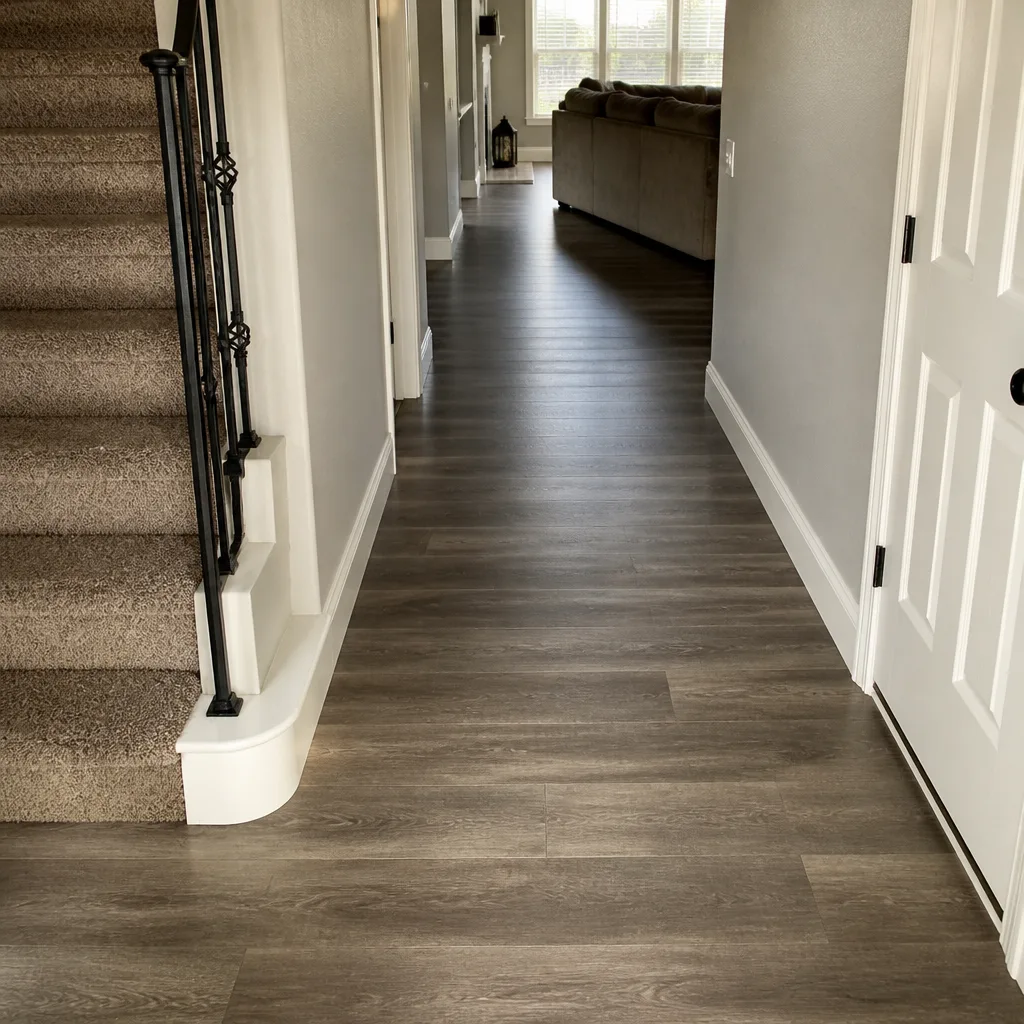 Sewage cleanup
 Reconstruction
Free visual inspection and a written scope of work before any mitigation begins - photos, moisture readings, and drying logs go in your claim file
The scope we write is the scope we bill. Anything new gets shown to you, in writing, before we touch it.
Get your free estimateFast, Reliable Storm Damage Restoration Across Chatsworth
Storm damage in Chatsworth rarely announces itself. It arrives as a wind-driven ember on a Santa Ana night, or as water pooling in a 1960s ranch home’s attic two days after a storm you never saw. When it hits, you need a crew that knows this terrain: the wood shake roofs, the stucco walls, the slab foundations, and the particular way water and smoke move through older San Fernando Valley construction. We dispatch restoration teams to Chatsworth neighborhoods daily, and a live person answers when you call (661) 347-1348, 24 hours a day. We’ve worked this area long enough to know that the first hour after damage determines whether you’re looking at a cleanup or a rebuild.
Key Takeaways for Chatsworth Homeowners
- Santa Ana winds pull smoke and soot into older roof vents even miles from the fire line – this is the most common storm-related call we get in Chatsworth.
- Water damage in stucco and slab homes hides for days before showing a stain. By the time you see it, it’s already traveled through wall cavities.
- Most storm-related water extraction in Chatsworth runs $1,200 to $3,800 before drying equipment is set, depending on affected square footage and category of water.
- We send you the technician’s name and photo before arrival. They show a photo ID badge at your door. Every time.
Restoration work we handle
Why Marsh Water Damage Santa Clarita Is Chatsworth’s Preferred Storm Damage Restoration Company
We’ve been restoring homes since 2005, and the ones in Chatsworth have their own set of fingerprints. The 1960s-through-1980s ranch stock, the original copper plumbing, the stucco that hides moisture until it’s already traveled – our technicians know what they’re walking into before they arrive. That local knowledge matters when a storm hits and you’re standing in a flooded living room trying to figure out whether the water went under the slab.
Every technician who arrives in Chatsworth is part of the Threshold Verified protocol. That means background-checked, identity-verified, uniformed, and sent to you by name and photo before the visit. Then they show a photo ID badge at your door. No exceptions. Tobias Reyner leads our team, and the standard he set from day one is that you know exactly who’s walking through your front door before the knock.
Chatsworth homeowners are often home alone during a storm event, or they’re parents with young children and a flooded garage. That makes the trust question as urgent as the water question. We answer both: IICRC, RIA, and IFA credentialed technicians, professional-grade equipment from Dri-Eaz, Phoenix, and XPOWER, a written price before any work begins, and a 365-Day Done Right Promise printed on every work order. If the repair isn’t right within a full year, we make it right, and the second visit is free.
Our Storm Damage Restoration team coordinates directly with insurance adjusters, documents every moisture reading, and sends you photo logs of the work. You don’t have to translate restoration jargon for your adjuster – we do it for you.
Flood Cleanup in Chatsworth
Flood cleanup in Chatsworth almost always starts the same way: a homeowner notices a damp spot on stucco, or a musty smell in a hallway, or water pooling at the base of an exterior wall after a windstorm. By the time that stain shows, water has usually been traveling for days – under the slab, through wall cavities, into drywall and insulation. The cleanup job here is not just extracting standing water. It’s finding where it went.
Most residential flood cleanup in Chatsworth runs $1,200 to $3,800, covering water extraction, removal of saturated porous materials, and the first phase of structural drying. The range widens when water has wicked into stucco and slab foundations, which is common in this area’s older ranch homes. We measure everything – psychrometric readings tell us when the structure is genuinely dry, not just dry on the surface.
Post-Windstorm Water Intrusion
After a Santa Ana event, we see water pushed through worn roof flashing and cracked shakes, then run down inside walls. The first sign is often a water ring near a baseboard or a soft spot underfoot. We remove the affected materials, expose the wet cavity, and set drying equipment within hours.
We document moisture readings daily and send you the log. When the structure reaches pre-loss moisture levels, we stop the equipment and bring you the numbers. You don’t have to trust a verbal “it’s dry now.”
Soot and Ash Cleanup
Even when no water enters, wind-driven ash and soot from distant fires settle into vents, eaves, and attic spaces. That fine particulate is acidic and, left alone, works its way into fabric, insulation, and drywall. We clean what can be cleaned, remove what cannot, and seal the openings that let it in.
Flooded House in Chatsworth
A flooded house in Chatsworth is a different job than a flooded apartment or a condo. The slab foundations here don’t have a crawlspace to absorb water – water that breaches a floor runs across the slab, under baseboards, into closets, and along wall plates to wherever gravity takes it. The damage footprint widens fast. In a 1960s or 1970s ranch, that means carpets, wood flooring, lower drywall, and sometimes cabinetry are all in play.
When a whole house floods – pipe burst, storm drain backup, or post-fire firefighting water – the first 24 hours are the costliest. A typical full-house flood cleanup in Chatsworth runs $3,800 to $9,500 for extraction, demo of unsalvageable materials, containment, and drying equipment. Category 2 or 3 water adds more, because more has to come out before drying can start. We put the written price in front of you before anything gets cut open.
Category 2 and 3 Water Pack-Outs
When the water source is contaminated – a sewer line, a storm drain, firefighting runoff – we pack out salvageable contents, remove the unsalvageable, and build containment so contaminants don’t spread through the house. The goal is a clean, dry envelope before we set extraction and drying equipment.
This is not a job for a shop vac. We use truck-mounted extraction and Phoenix and XPOWER air movers, the same gear commercial losses run on, sized down for a Chatsworth ranch.
Slab Foundation Drying
Water under a slab doesn’t evaporate upward through vinyl or tile easily. It sits, keeps the slab wet, and creeps upward through walls. We monitor slab moisture with specialty probes and keep drying equipment running until the readings say the concrete is back to its normal range. Walking away too early is how you get mold six months later.
Trusted Brands We Service in Chatsworth
We’re brand-agnostic, which means we work on whatever is in your home, not whatever pays us a commission. That said, Chatsworth ranch homes often have original fixtures and plumbing from the 1960s and 1970s, and we keep local stock of the common repair parts for those systems so we’re not waiting on a distributor while your walls stay wet. Our drying equipment includes Dri-Eaz dehumidifiers, Phoenix and XPOWER air movers, and B-Air filtration systems. We use Injectidry for targeted wall cavity drying when the damage is confined to one room. You don’t pay more because we brought the right tool. You pay less because we don’t have to come back.
See the difference
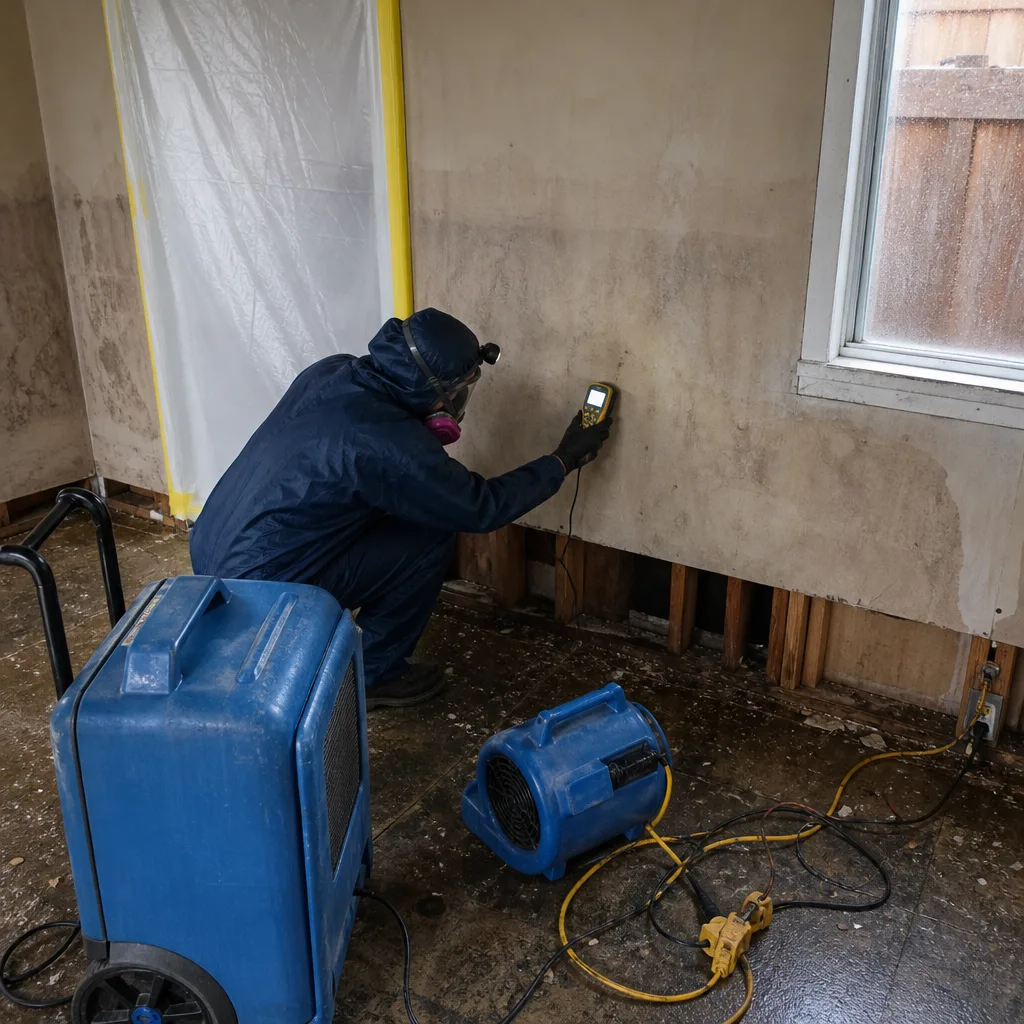 Before
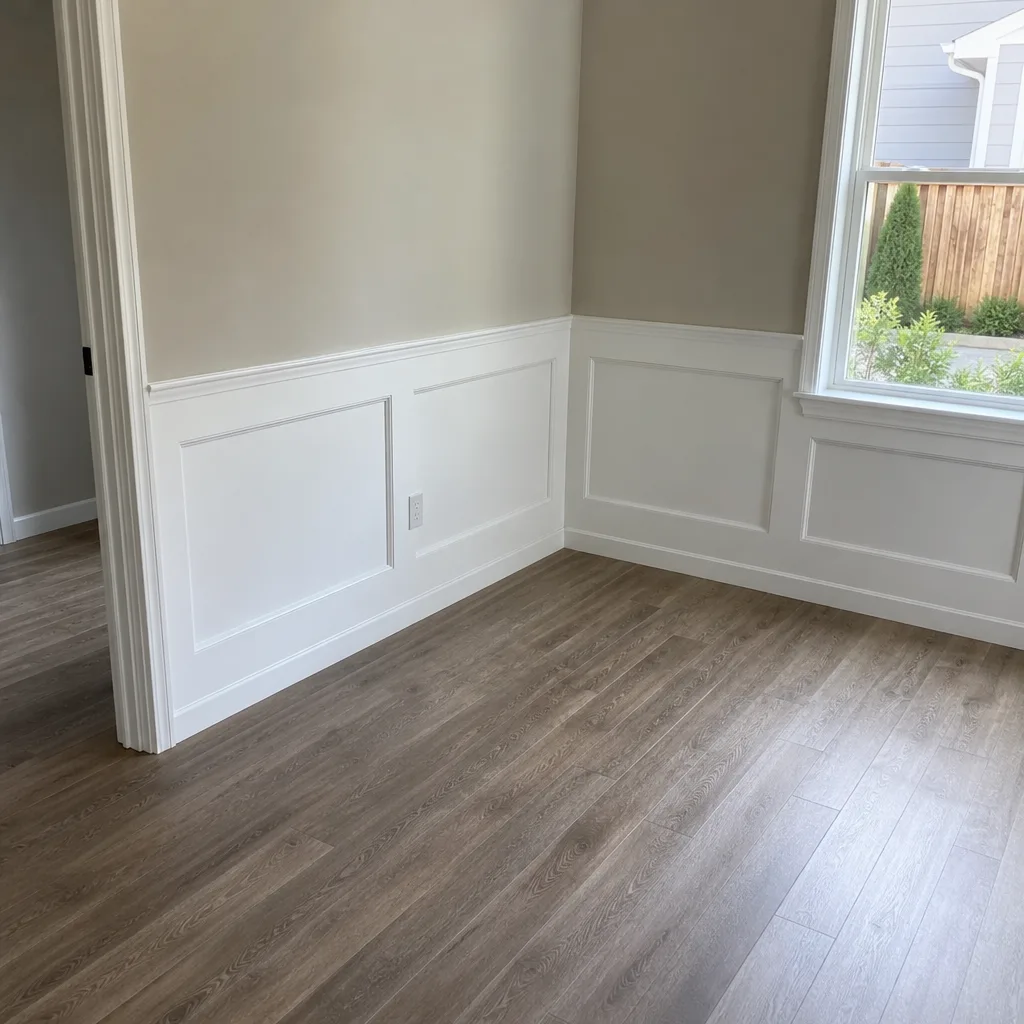 After
After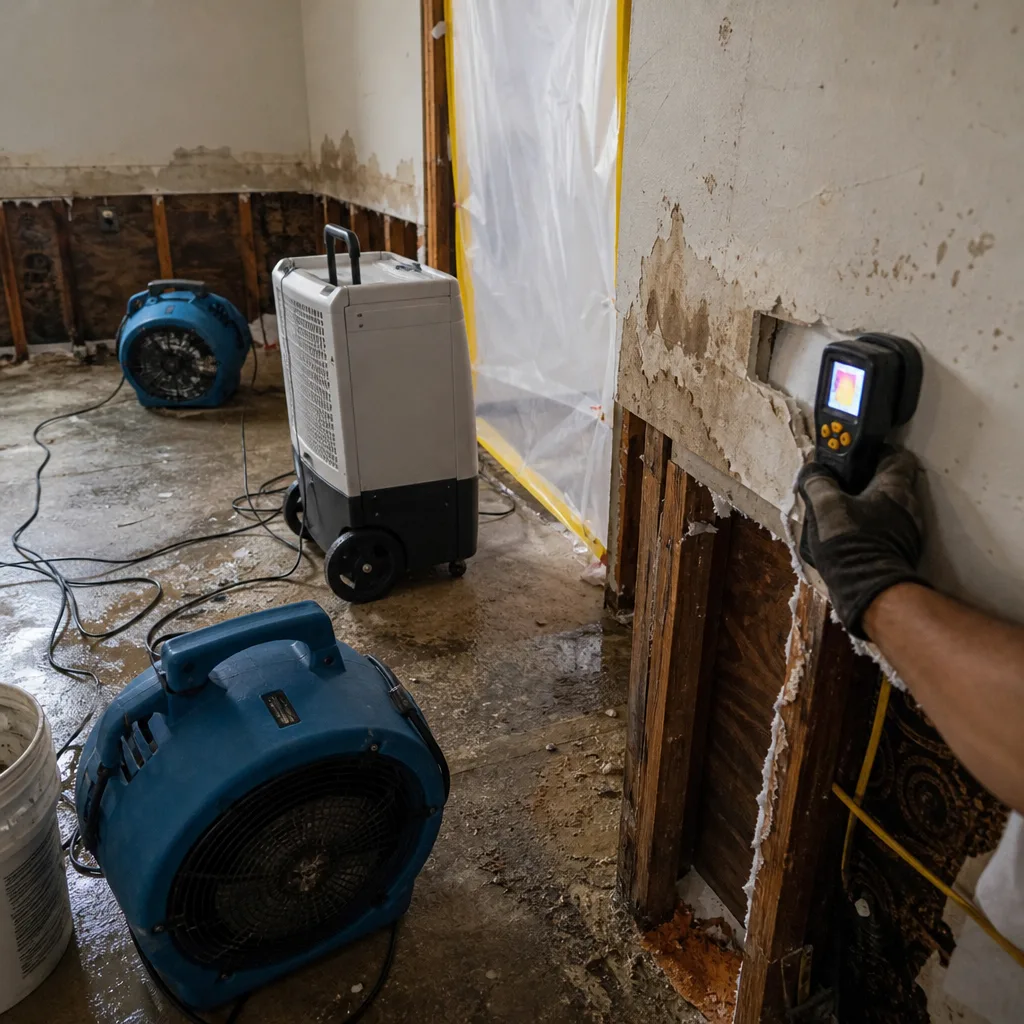 Before
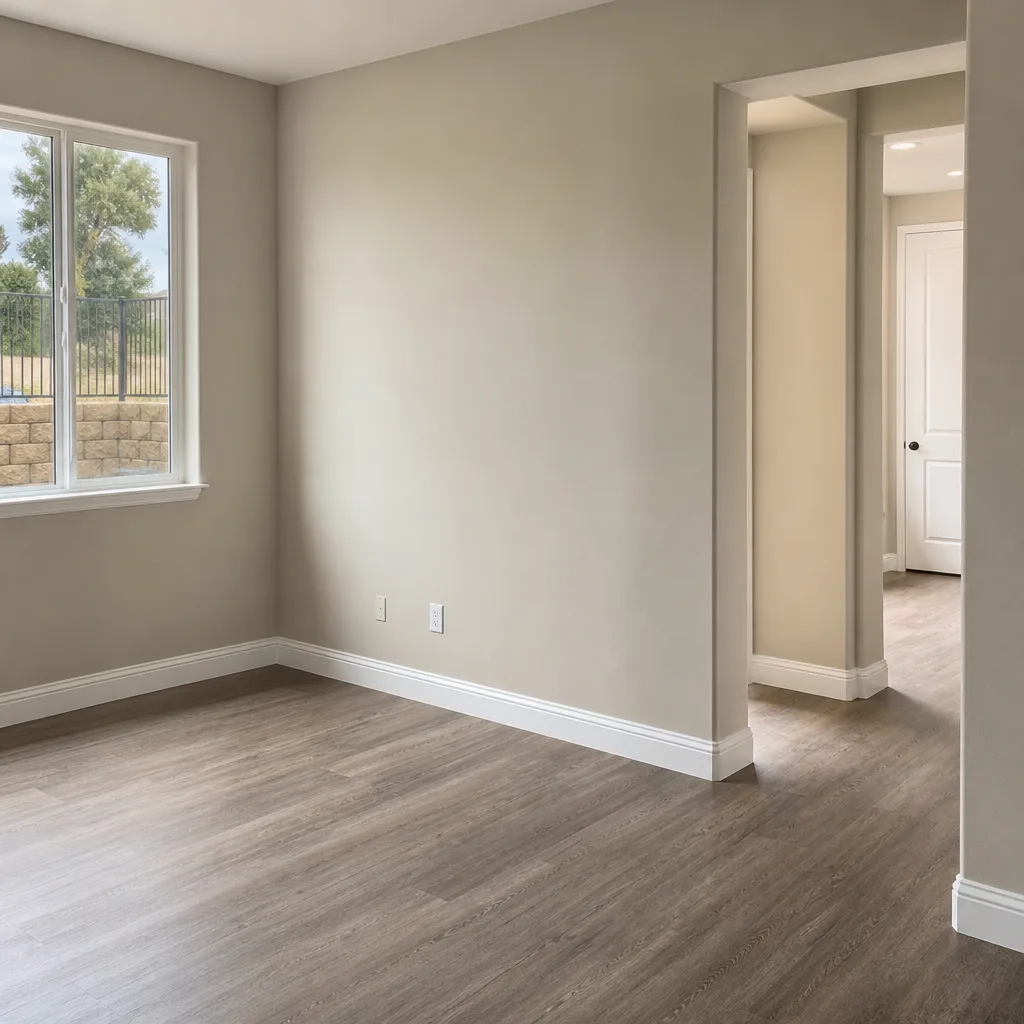 After
After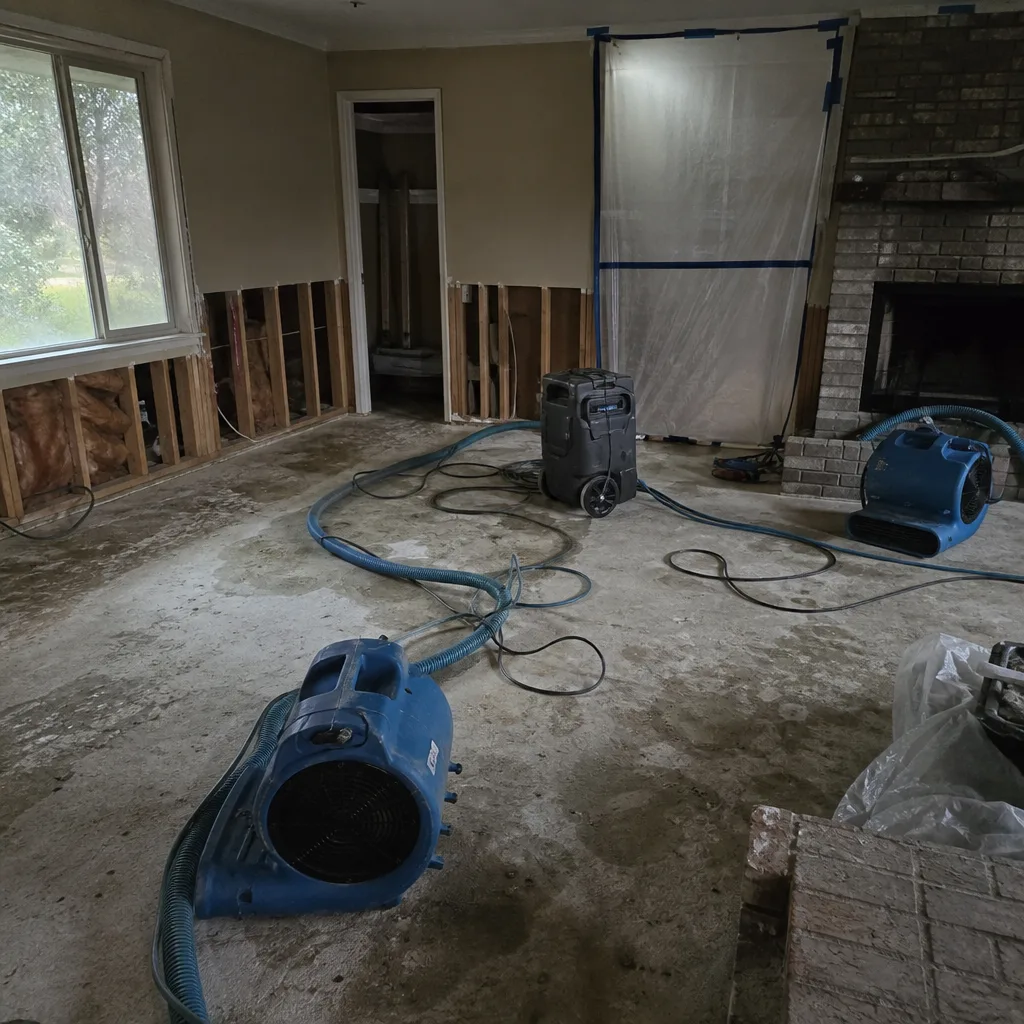 Before
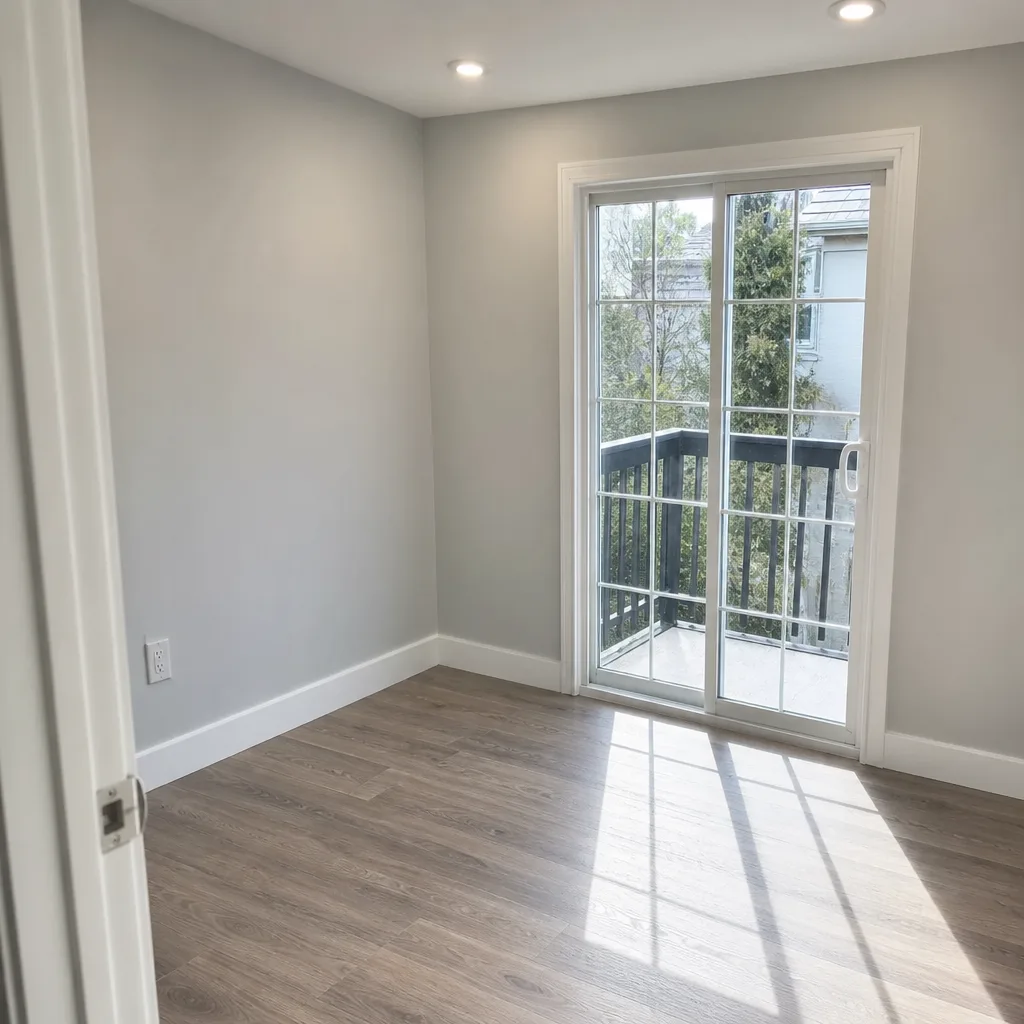 After
AfterCommon Storm Damage Restoration Problems We See in Chatsworth Homes
- Pinhole leaks in original copper plumbing after wind events: Chatsworth’s hard water eats copper from the inside, and wind vibration shakes loose already-thin spots. Water then travels under the slab and into wall cavities before anyone sees a stain. We find these with moisture mapping, not by looking for puddles.
- Galvanized supply lines that burst during cold snaps: Many 1960s ranches still run on galvanized steel, and years of Chatsworth hard water have corroded them thin. A cold night, a pressure spike, and a wall cavity floods from the inside out. These are category 3 pack-outs, every time.
- Wood shake roofs that crack under wind load: Dried-out shakes split during Santa Ana winds, and then rain – or firefighting water – enters the attic. Within 48 hours of the first moisture, mold can start on drywall and insulation. Speed is not optional here.
- Soot intrusion through older roof vents and poorly sealed eaves: On windy fall days, we get calls from homes miles from the nearest fire with dark streaks near vents and a fine ash film on everything. That soot is acidic. It needs professional cleaning, not a feather duster.
Pricing for Storm Damage Restoration in Chatsworth, CA
Storm damage restoration costs in Chatsworth depend on one thing more than any other: where the water went before you noticed it. A contained kitchen flood runs $1,200 to $2,500. A full-house flood with slab saturation runs $3,800 to $9,500, and category 3 water pushes that north of ten. Soot and ash cleanup from a Santa Ana event usually lands $800 to $2,200 depending on square footage and how much insulation needs replacement.
What affects the number: the water’s source and category, how many rooms are involved, whether stucco needs to come off to dry the cavity behind it, and whether the slab is wicking moisture. We don’t quote blind, and we don’t open walls without a written scope you’ve approved. Call (661) 347-1348 and we’ll give you an exact number after an inspection. Estimates are free.
We Also Serve Cities Near Chatsworth
We serve Chatsworth and the surrounding valley communities, including Porter Ranch, Northridge, Winnetka, and Reseda. If you’re in one of those areas, the same team covers you. For more about our coverage across this part of Los Angeles, see Storm Damage Restoration in Chatsworth.
Serving Chatsworth, CA - Our Local Coverage Area
We’re based in the Chatsworth area and know this community well. Use the map below to see our service coverage - if you’re nearby, we can almost certainly help.
FAQs About Storm Damage Restoration in Chatsworth
Santa Ana winds force smoke, soot, and fine debris through roof vents, cracked shakes, and poorly sealed eaves, and the same wind pressure can compromise already-worn flashing and shingles. When the wind damages a wood shake roof’s surface, a later rain – or firefighting water from a nearby fire – finds the opening and enters the attic. You see water stains days later, even though the windstorm itself was dry. Call (661) 347-1348 for an assessment after any major wind event.
Stucco is a cementitious shell that can hold moisture against the wall cavity without showing a visible stain for days or weeks, while wood siding swells, discolors, and telegraphs water quickly. In a Chatsworth stucco ranch, water from a roof leak or window intrusion sits inside the wall cavity against wood framing and drywall, with no tell on the exterior. By the time stucco shows efflorescence or a soft spot, the cavity behind it is already saturated. We inspect after any wind or water event, even if the stucco looks fine.
Two patterns dominate: pinhole leaks in original copper supply lines, which burst or split under temperature swings and hard-water corrosion, and roof water intrusion through cracked wood shakes and worn flashing. Both put water into wall cavities and under slab foundations in 1960s ranches, and both travel farther than homeowners expect before a stain appears. We bring moisture mapping equipment to find the full footprint before we open anything.
Yes, especially if your home has older roof vents and less-than-perfect eave seals. Last November, during a Santa Ana wind event, our crew responded to a 1970s ranch on Lassen Street near the Santa Susana foothills where wind-driven embers had ignited a wood shake roof. Firefighting left heavy water in the attic and walls; our techs performed category 2 water extraction, set up containment, and used Dri-Eaz dehumidifiers with XPOWER air movers for structural drying. Moisture mapping showed the stucco and original copper plumbing had wicked water into the slab, and we documented drying logs daily until pre-loss condition was reached. Homes miles from the fire had soot intrusion through their vents. We clean both the direct damage and the wind-carried soot. Call us for an inspection if you smell smoke indoors after a wind event.
Immediately. Slab foundations don’t drain – water sits, wicks into walls, and starts the clock on mold growth within 48 hours. The longer water remains in a Chatsworth slab home, the more of your flooring, drywall, and cabinetry gets replaced rather than dried. Our live-answer line is open 24 hours, and we can typically have a crew on site in Chatsworth within hours, not days. The 365-Day Done Right Promise means if the drying was incomplete and something shows up later, the second visit is free.
Call (661) 347-1348 now for a free estimate, or to get a technician’s name and photo before we arrive. We answer live, we document everything, and we put the price in writing before any work starts.
Written by Tobias Reyner, Owner at Marsh Water Damage Santa Clarita, serving Chatsworth since 2005.